
Excerpt
koja skirtuose straipsniuose pateikta vidutiniškai nuo septynių iki dešimties pastoviųjų žodžių junginių. Iš vienos pusės, tai liudija apie žodynų turtingumą, tačiau iš kitos, dėl šitokios viename straipsnyje sutelktos posakių gausos, reikiamo …
Excerpt
Pastovieji žodžių junginiai yra organiška paralelinių dvikalbių žodynų mikrostruk- tūros dalis, be kurios būtų neįmanoma atskleisti nei pagrindinės, nei verčiamosios kal- bos savitumo ir turtingumo. Vis tik leksikografai neturėtų pamiršti, jog į žodynus …
Excerpt
11.Mounin G. Clefs pour la sėmantigue. — Paris: Seghers, 1974. 12. Roberts R. P. Le traitement des collocations et des expressions idiomatiques dans les dictionnaires bilingues // Les dictionnaires bilingues. — Bruxelles, 1996, p. 181-193. Les …
Excerpt
> LES PARTICULARITÉS DU VOCABULAIRE QUÉBÉCOIS Nijolė Regina Teiberienė Universitė de Vilnius, L'Institut des Langues entrangères Tel.: + 370 5 2687275 Dans |’ exposé on fera la tentative de déterminer la relation du français québécois avec le français …
Excerpt
mots employés seulement au Canada et au Québec; les anglicismes qui y abondent exigent une étude à part. Pour expliquer la signification des mots nous nous sommes fondés sur le «Dictionnaire de la langue québécoise» de L. Bergeron (1980); «Dic- tionnaire …
Excerpt
placard (18° s.); jaquette: chemise de nuit (19° s.); poéle électrique: cuisiniére électri- que (1% s.); carosse: landau (20° s.); cadron: réveil-matin (17° s.) (Lavoie 1995, 372). b) Dialectalismes ou provincialismes. Le français québécois a conservé …
Excerpt
2. Canadianismes ou québécismes Le canadianisme (1888, de canadien), c’est un fait de langue (mot, tournure) propre au frangais parlé au Canada (par ex., le canadianisme dėbarbouillette ėguivaut a «gant de toilette» (Petit Robert 1998, 243). De méme «le …
Excerpt
assez parler, amarre-là). Les mots à l’origine agricole: broche a foin, adj. ou n. m. ou f.: rafistoleur. Ex.: Regarde ce broche à foin-là!), les clôtures de broche piquante — clôtures en fil de fer barbelé; être sur la clôture où à cheval sur la clôture …
Excerpt
REFERENCES Barbeau V. 1970. Le français du Canada, Québec. Béliveau M., Granger S. 2000. Savoureuses expressions québécoises. Québec. Bergeron L. 1980. Dictionnaire de la langue québécoise. Montréal. Boulanger J.-C., Rey A. 1992. Dictionnaire québécois …

Excerpt
KALBOS MOKYMAS LANGUAGE TEACHING …

Excerpt
ita ana pin, Kes atsi ‘, à + ae BR …
Excerpt
THE INVESTIGATION OF THE INSTRUCTORS’ ATTITUDES TOWARDS LEARNER AUTONOMY AT PREPARATORY SCHOOL Gazi University, Gazi Faculy of Education, Department of Foreign Languages, Turkey balcikanli@gazi.edu.tr 1. Introduction Learner autonomy defined as “the …
Excerpt
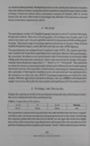
act and learn independently. During this process, no one can deny the vital role of teachers since the ability to behave autonomously for students is dependent upon their teacher creating a classroom culture where autonomy is accepted (Critchley, 2001:3). …
Excerpt
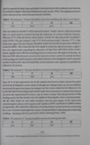
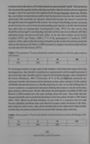
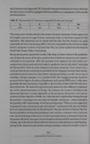
that the capacity to think, learn and behave autonomously is often claimed as an outcome for students in higher education (Stephenson and Laycock, 1993). The significant answers of the instructors are viewed in more detail as follows. Table 2. The …
Excerpt
As shown in the table above, 52% of the instructors answered with “partly”. The instructors who are generally regarded as the authority may believe that the learners are not competent enough to select the materials to be exploited in the foreign language …
Excerpt
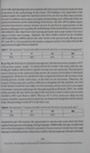
42 % of the participating instructors maintain that the learners should be much involved in decisions of the methodology of the course. This finding is very important as the learners ought to be taught the way they learn the best, not the way their …
Excerpt
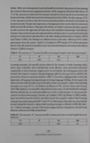
(Little, 1994). As a consequence, learners should be involved in the process of determining the content of homework assignments (Little, 1994). It appears from the table above, 37 % of the instructors think that the learners should be much involved in …
Excerpt
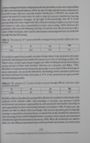
» Learner training should aim to help learners develop the ability to take more responsibility for their own learning (Dickinson, 1993). In order to help students become autonomous, " it would be more effective to provide learner training (Lee, 1998:285). …
Excerpt
there has been much approval (78 %) from the instructors since they are aware of the fact that the learners should be equipped with the portfolios as a consequence of the benefits mentioned above. Table 13. The statement 23 “Learners are responsible for …
Excerpt
derstand themselves better. Since many adult learners would like to learn how they earn a language as a result of her/his nature, the learners should be made aware of the ature of learning. 4. Results and Suggestions The results gathered through the …
Excerpt
Genesee, F. and Upshur, J. A. 1996. Classroom-Based Evaluation in Second Language Education. Cambridge. CUP. Holec, H. 1981. Autonomy in Foreign Language Learning. Oxford: Pergamon. James, C.V. and Garrett, P. 1991. Language Awareness in the Classroom. …
Excerpt
FACHSPRACHENUNTERRICHT AN DER UNIVERSITAT: PROBLEME, UBERLEGUNGEN ZU KONZEPTION, ZUKUNFTSPERSPEKTIVEN Dalia Bukauskaitė, Dalius Jarmalavičius Universitit Vilnius, Institut fiir Fremdsprachen dbukauskaite@web.de, daliusj2001@yahoo.de Wer fremde Sprachen …
Excerpt
Die Auffassung, wonach ,,Fachsprache = Allgemeinsprache + Wortschatz“ ist, gilt mittlerweile als langst tiberholt. Ebenfalls auch die Praxis des Fachsprachenunterrichts, die vor allem die Vermittlung von Fachwortschatz anstrebt. Nach Buhlmann & Fearns ist …
Excerpt
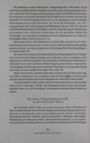
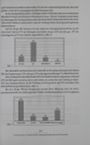
und Politikwissenschaften unterrichtet. Es wird ein studienfachspezifisches Deutsch gelehrt, wobei die Lernergruppen fachlich homogen sind. In der durchgeführten ad-hoc-Umfrage wurden 104 Studierende aus verschiedenen Fakultäten befragt, die Deutsch als …
Excerpt
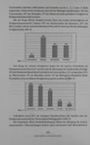
Leseverstehen, Sprechen, Hörverstehen und Schreiben an der 1., 2., 3. bzw. 4. Stelle eingeordnet. Dabeistellte sich heraus, dass 54% der Befragten das Sprechen, 33% das Leseverstehen, 8% das Schreiben, 5% das Hören als meist geförderte Fertigkeit im …
Excerpt
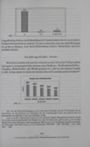
91% 7% ja nein ich weiB nicht Abb. 5 Fragenkatalogs dienen, um die Bedürfnisse der Studenten/Innen für den universitären Fachsprachenunterricht zu ermitteln!. Eswäre zu wünschen, dass eine solche Befragung im größeren Rahmen, etwa durch Einbeziehung …
Excerpt
In manchen Fakultäten werden seit kurzem nur fachlich heterogene Gruppen gebildet, so dass ein Hochschullehrer nicht in der Lage ist, für einen oder zwei Studenten des jeweiligen Fachs fachspezifische Kurse vorzubereiten. Umstritten ist auch die Relevanz …
Excerpt
Beginn und Dauer des Fachsprachenunterrichts Bis jetzt unterrichtete man nach Fakultat Fachsprachen an der Universitat Vilnius 2 bzw. 4 Semester je von 64 bis 96 Unterrichtseinheiten pro Semester. Die verschiedenen Neukonzeptionen des universitären …
Excerpt
Sprachpolitik an der Universitat Last but not least wird das Thema der Sprachenpolitik an der Universitat Vilnius angesprochen. Allgemein lässt sich die Tendenz beobachten, dass Sprachenlernen in Zukunft aus den Studienprogrammen völlig gestrichen wird. …
Excerpt
Fremdsprache beschränkt, was dazu führt, dass andere Sprachen kaum oder gar nicht gelernt werden. Um aber das Gesamtkonzept europäischer Mehrsprachigkeit verwirklichen zu können, bedarfes einer umfassenden und aktiven Sprachenpolitik, die leider an den …