

Excerpt
Nevertheless, generally, a great number of learners end up with poor writing skills. Why is writing so difficult for the learners? What is it that blocks them when they are writing although they are exposed to writing instruction in the second/foreign …
Excerpt
learners discover what they want to say as they write, gives them feedback through the composing process, encourages feedback both from the instructor and peers, and includes individual conferences between teacher and learners in process of composition. …
Excerpt
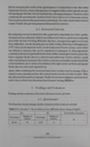
Before discussing the results of the questionnaire, it is important to note that within Exploratory Practice, when collecting data, it is suggested that teachers should use stan- dard pedagogic activities, but not standard data collecting techniques. …
Excerpt
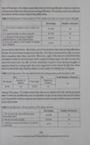
Out of 74 learners, 70 of them stated that they had writing difficulties whereas only four of them stated that they did not have writing difficulties. From this result it was inferred that almost all the learners had writing difficulties. Table 5.1.2: …
Excerpt
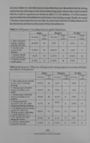
As seen in Table 5.1.4 18 of the learners stated that they were dissatisfied with the writing courses because of having to write about uninteresting topics. In fact, this result correlated with the result for question two shown in table 5.1.2. In …

Excerpt
The results for Question showed that 64 learners out of 74 believed that writing should be integrated with other skills. Besides, a great deal of the learners —56 out of 74- stated that teachers should correct all their mistakes. As for learner …

Excerpt
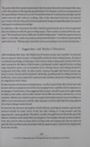
6.2. Structured Interview The quantitative analyses of the interview are given in table 6.2.1. below. 1. What are the difficulties that you face when writing? 2. What kind of strategies do you apply to overcome these difficulties? 3. When you are asked to …
Excerpt
The points that the learners mentioned in the structured interview correlated with some of the data gathered through the questionnaire. For example, in the second question of the questionnaire 38 learners out of 74 stated that lack of vocabulary knowledge …
Excerpt
As poor writers mainly suffer because of linguistic incompetence and poor organization skills, to help them become more organized and linguistically more competent, partici- pant teachers suggested that learners should be provided with more productive …

Excerpt
Praktinis tyrimas: kodėl studentams sunku rašyti DENIZ RENDA KORUM Santrauka Šiame straipsnyje apžvelgiamas praktinis dėstytojų tyrimas, kuriuo buvo siekiama išsiaiškinti, kas studentams yra sunkiausia, rašant gerai išdėstytus ir prasmingus rašinius anglų …
Excerpt
THE MORAL DIMENSION OF ENGLISH LANGUAGE TEACHING PROCESS Roma Kriaučiūnienė Klaipėda University roma.kriauciuniene@uki.vu.lt Introduction It is very important that university students should have expertise knowledge in their professional areas as well as …
Excerpt
acquire language competence. As J.Crandall (1992) points out, English language is a medium of acquiring subject specific knowledge or by means of teaching content a foreign language is learnt. S.Krashen (1982) suggests that the second language is most …
Excerpt
of the learning strategy students learn the language better. Many researchers (Oxford, 1990; Richard-Amato,1996; Murray, 1982) emphasise learner centredness and awareness of their individual learning styles. Other scholars (Stern, 1991; Newton, 1985) also …

Excerpt
It has been maintained that the most important aspect of language teaching process is the provision of favourable conditions for learning. A research into students’ foreign language learning attitudes conducted by A-Ramo&kiené (1987—88m.) revealed that …
Excerpt
language, as Morgan (1997, p. 446) puts it: „sometimes is a thing of beauty, sometimes a model of clarity and precision, and sometoimes a weapon.“ It should be mentioned that in the area of teacher development there has been an undergoing active …
Excerpt
psychology (Maslow, 2006). In B.Johnston‘s (2003) opinion this value is very important because of two reasons. Firstly, most of the teacher's time and energy is allocated for learners; secondly, teachers teach those values that they themselves believe in. …
Excerpt
e The analysis of literary work provides wide opportunities for overall personality development (cognitive, aesthetic, affective and moral). e The provision of favourable (friendly, democratic) learning environment has a positive influence on language …
Excerpt
21. Richard-AmatoP.A. (1996). Making it happen: Interaction in the second language class- room (2nd ed.).White Plains, NY:Longman. 22. Rogers T. (2001). Methodology to the New Millenium. http:/Avww.exchanges.state.gov./ forum/vols/vol38/no2/p2.htm (Zr.: …
Excerpt
LITERATURE AND LANGUAGE TEACHING: A MULTICULTURAL APPROACH Juan Ignacio Oliva Cruz University of La Laguna, Tenerife, Canary Isles, Spain jioliva@ull.es The question to be answered is whether a learner variety is based on recognisable organisational …
Excerpt
English as a lingua franca in the world nowadays, it seems not to be enough for future specialized professionals to compete with high standards, without the learning of a se- cond, third, and other languages to interact. The ideal situation could indeed …

Excerpt
If you don’t want it your ---------- „that is, (life) don’t just bury it or leave it there to wither or to crumble away in grains of dust and mould. If you want you can throw it but not away. First take it into your ---------- (hands) examine it carefully …
Excerpt
As I listened to her I looked at this place full of : : (plants, food, shining lights) and bland smiling faces and thought this light of ours it comes from so much ——————..°_ (darkness) It depends on the tragic or comic ethos that is found here, once …
Excerpt
key words extracted and translated in the other five languages; its lyrics are also spelled in syllables, to facilitate the access to the pronunciation and the meaning. A short summary of the content is also offered in each of the leaflets that accompany …
Excerpt
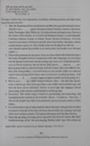
Will you come and be my wife? Or, dear Madam, have you settled To live single all your life? [O no John!...]7 This piece of lyrics has a lot of grammar, vocabulary, rhythmic patterns, and other items to get the most out of it: 1. Take the beginning of the …
Excerpt
be done collectively and the stanzas in small groups, or with solo singing, in all its variants. 7. Semantic field study: Hill / sea (geographical accidents: mountain, cliff, ravine, valley, ocean, river, rivulet...); silken dress / jewels (wearing: …
Excerpt
ideologies, among others”.? And lastly, the interaction with personal and artistic sensitivity, through the medium of music, painting, performing, and other disciplines, provides language learning with an easier and more reachable access, and helps to …
Excerpt
TESTING AND ASSESSING WRITING IN THE CONTEXT OF ESP CLASSROOM Trina Orlova Latvia University of Agriculture, Faculty of Social Sciences Phone: +371 630 05650 The whole process of foreign language acquisition is the sequence of teaching and learning, as …
Excerpt
both its strong and weak points. It is especially important in relation to FL writing skills which can be assessed almost solely in the form of a written test (at least this is the most common way how to do it). In short, the above discussed was an answer …

Excerpt
To help the students develop certain writing skills and use them with confidence, either a ‘step-by-step’ or ‘complex’ approaches can be applied. In other words, the writing tests may either put emphasis on a separate writing skill or treat them all in …

Excerpt
same time, composition tests represent a technique that checks the writing proper at the text level. At the composition level, it is important to tailor the tests to the particular learners’ community and learning situation, and it goes without saying …