
Kozonius... unt gaylinga atprowijma...
Mykolas Pranciškus Karpavičius.
Vilnius, 1794
Mykolas Pranciškus Karpavičius.
Vilnius, 1794
One of the ideological leaders of the 1794 Uprising against Tsarist rule and the pro-Russian Targowica Confederation was Mykolas Pranciškus Karpavičius (Michał Franciszek Karpowicz, 1744–1803), a Lithuanian bishop and talented preacher. During the Uprising, on 20 May 1794, at Sts. Johns’ Church in Vilnius, Karpowicz delivered a funeral sermon titled “Kozonius ant gailingo atprovijimo pagrabo”, dedicated to honouring the soldiers of the Grand Duchy of Lithuania who had fallen for freedom and their land. In it, the author praised the defenders who had sacrificed their lives for their Fatherland—not only well-known statesmen and public figures, but also ordinary “heroes of the nation”, peasants and townspeople—emphasising the fact that the entire nation had taken up arms against the occupiers in this war: Here march all citizens, regardless of class, wealth, social standing, faith or profession. <...> Here, people who are faithful to God, to their fatherland, to the law, to their kings, and to the sacred religion of their fathers are going to war.
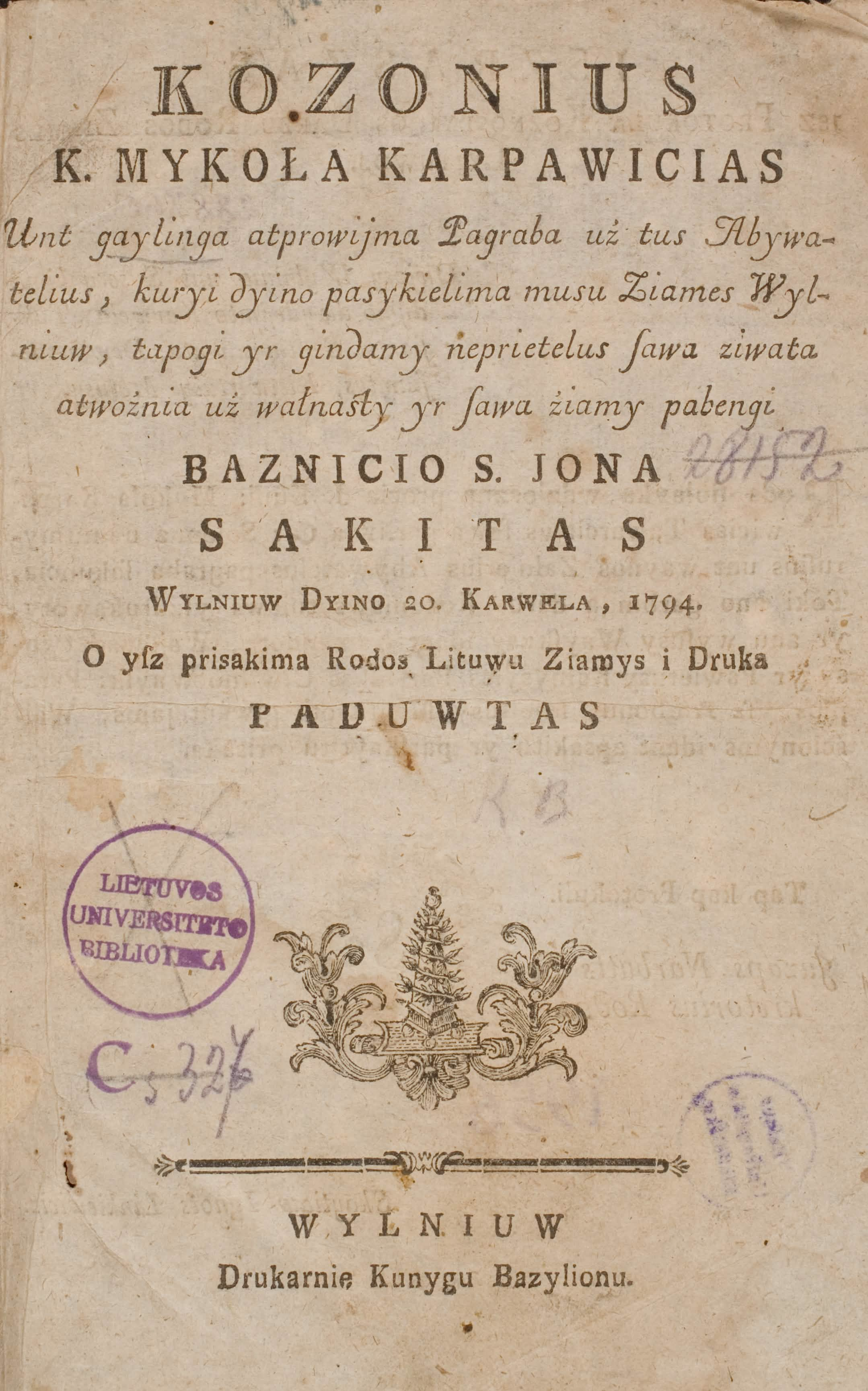
This sermon was so compelling that the leadership of the uprising—the Supreme Council of the Lithuanian Nation—ordered it to be translated into Lithuanian, “printed immediately” and distributed to all units of the Lithuanian Army, in the voivodeships and counties, towns and parishes. In other words, even at that time, the sermon was regarded as an exceptionally valuable tool for fostering national consciousness, spreading the ideas of liberation from occupation, and encouraging the desire to fight honourably for one’s Fatherland and family. It is believed that the author himself translated it into authentic late 18th-century Lithuanian. This patriotic sermon on the entire nation’s self-sacrifice for the Fatherland and freedom remains relevant even today, and upon reading it in modern Lithuanian in the book* published by Kristina Mačiulytė, it becomes clear why it had to be completely destroyed, to the extent that only a single copy of “Kozonius” has survived to the present day. It was once owned and read by Kazimieras Būga (1879–1924), a researcher into the history of the Lithuanian language and a pioneer of Baltic studies.
In 2025, Karpavičius’ “Kozonius” was included in the Lithuanian National Register of the UNESCO Memory of the World Programme.
A few quotations from “Kozonius”:
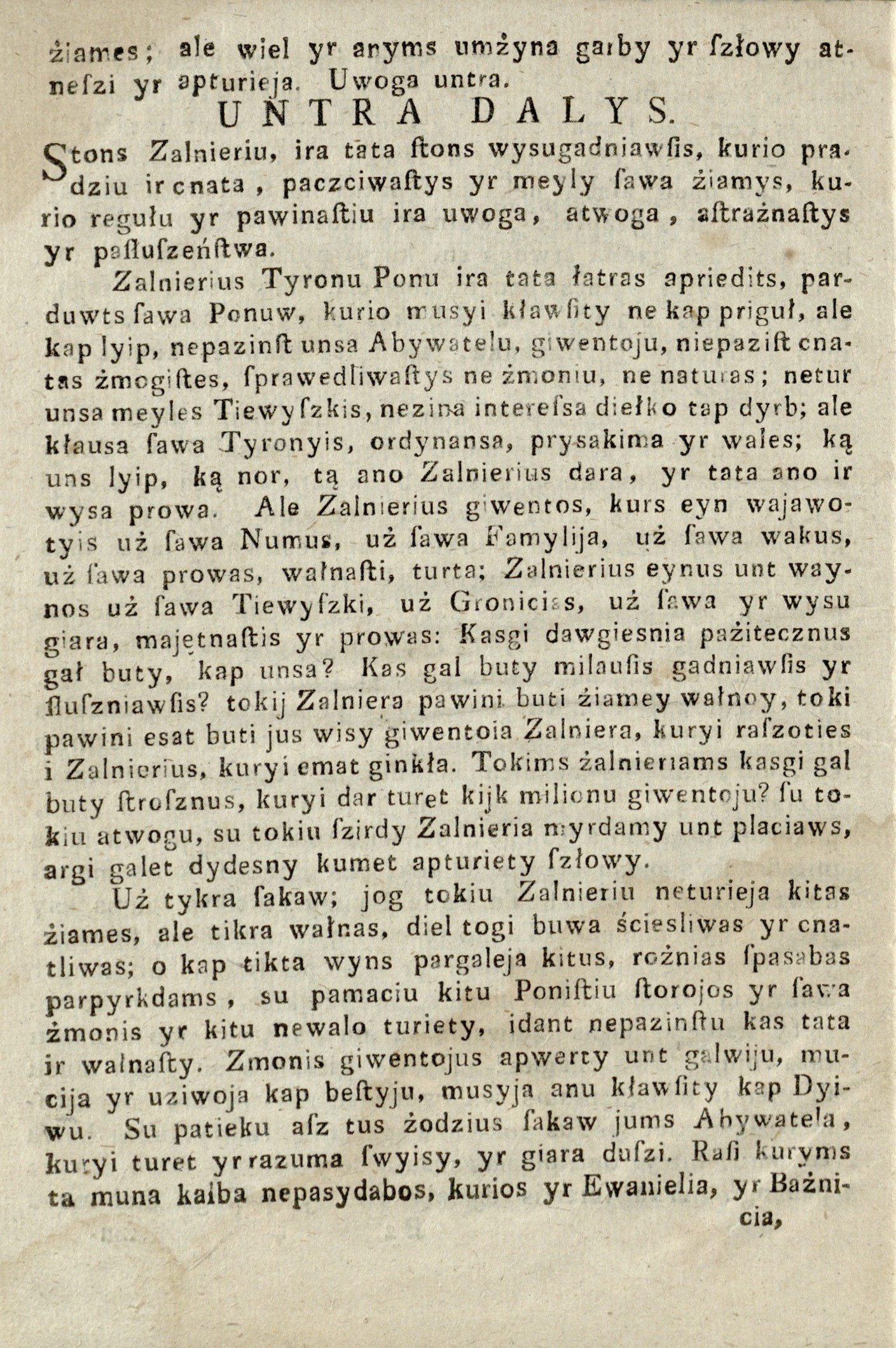
<...> The military class, esteemed for its honourable purpose, is the noblest of all; [its] foundation and source lie in virtue, reliability and love of the nation, while prudence, courage, vigilance and discipline are its rules and principles. The soldier of a despot and a tyrant is an armed robber, sold out to his master’s whims and caprices; being obedient to his commands, [he] knows neither what it means to be a citizen nor what a fatherland is; he knows neither what virtue is nor what humanity is; nor does he know what love for his people is, nor the interests of his country; he has no understanding of innate justice or of any human rights—he is guided solely by the despot’s orders, instructions and will. However, the citizen-soldier, who on [the battlefield] sacrifices his life for his home, his family, his children, his right to freedom and independence, a soldier of the Republic, sacrificing his life, blood and wealth for his fatherland, his nation, the inviolability of its borders, an independent government, and laws common to him and to all—what could be more noble in the world than such a soldier? <...>
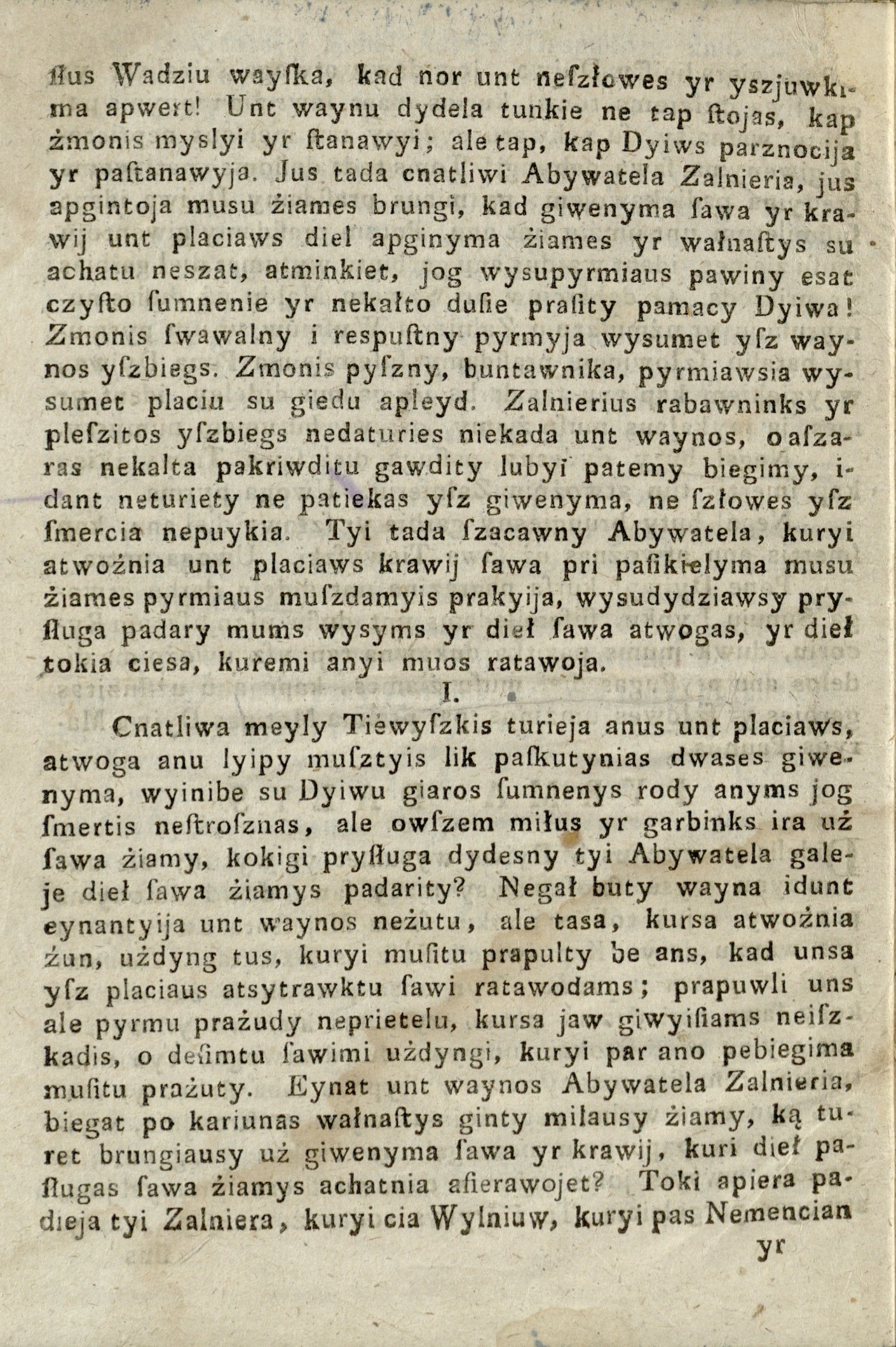
<...> There is no such war in which those who go into battle do not perish; but he who bravely lays down his life shields those who would have perished without him, had he abandoned the field [of battle] to save his own life; he fell, but first he took the life of an enemy who can no longer harm the living, and with his own body shielded dozens who would undoubtedly have perished had he fled. You are going to war, fellow soldiers; you are rushing under the banners of freedom to defend your beloved fatherland—is there anything more precious to you than your own lives and the blood you willingly sacrifice in the service of the nation? <...>
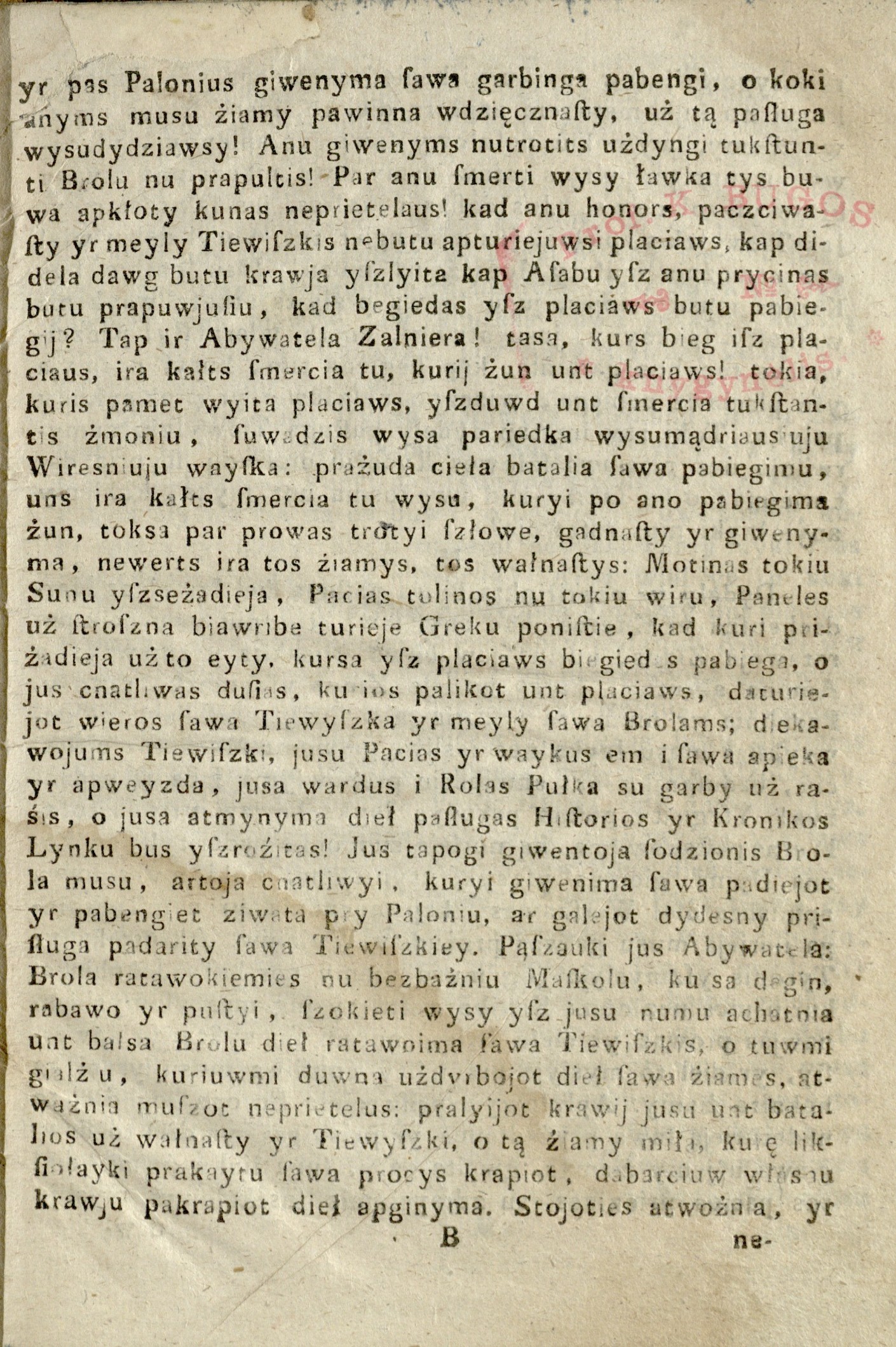
<...> If honour, nobility and love for the fatherland had not compelled them to hold their ground on [the battlefield], how much [more] of our brothers’ blood would have been shed? How many people would have perished because of them, had they shamefully fled [the battlefield]? <...> He who flees [the battlefield] is guilty of the deaths of those who perish on the field! He who flees from the [site of] the engagement allows thousands of ordinary people to be slaughtered, reduces even the most perfect plans of commanders and elders to nothing, and by his flight ruins the entire battle; he is to blame for the deaths of those who perish after he has already departed. Such a criminal, by law, forfeits his honour, his good name and his life; he who flees the battlefield is unworthy of life, of a fatherland, of living under the law of liberty. Mothers should disown such sons, wives should abandon such husbands, and Greek maidens regarded it as the gravest of crimes if any of them were to marry a man who had shamefully fled the battlefield. <...>
* Mykolas Pranciškus Karpavičius. Rinktiniai pamokslai / prepared by Kristina Mačiulytė. Vilnius : published by the Institute of Lithuanian Literature and Folklore Press, 2003.