
Excerpt
114 4. POPULATION STRUCTURE IN M cow region (Likhachev 1966b). According to Schulze (1973), the proportion of males in the South Harz Mountains increased from 48% in litters to 50% among independent young-of-the-year and to 60% among adults. However, the …

Excerpt
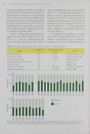
4.2. DEMOGRAPHIC STRUCTURE Table 15. Sex ratio among adult M. avellanarius in different regions The Alps, Germany SBr/ - 123 Kahmann & Frisch 1950 Tula region, Russia 52.9 46.7-55.3 155 Likhachev 1954 Moscow region, Russia 56.2 40-64 306 Likhachev 1966b …

Excerpt
116 4. POPULATION STRUCTURE IN M male proportion in the population (r, = 0.75, p> 0.05, n=7; calculated from data presented in Likhachev 1966b). In Lithuania, the same tendency was obvious among three data sets: the lowest average proportion of males …

Excerpt
dormice contributed 67-70% of individu- als, two-year-olds 20-23%, three-year-olds 5-8%, and four-six-year-olds 1-4% in the populations investigated in Lithuania and in the Moscow region. Age structure in adult males and females was very similar at site A …
Excerpt
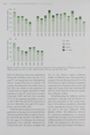
118 4. POPULATION STRUCTURE IN M. AVELLANARIUS Number of dormice caught | 203, (sr a | 1988 i 2002 a Number of dormice caught — 1990 | | 1989 1991 | 1992 ad || | | he a vr wo oO y ao aD Sos N oO co So So So oOo oS oOo x, = _ ro) OOF 4OOF. oO Oo) oO On Oo …

Excerpt
250, a No So oO Number of dormice caught oy oe oe o 14 | 1985 | 1986 | oe7 | a 28 | 7 009 | 7 1999 | 2000 | a7 a | 2002 | a 2005 150 100 - 505 0 T lo oO > ) Number of dormice caught T T 1066 | 1988 | ay 0609 | a 1 1991 | _ © a = So aD a 1984 1992 4.2. …
Excerpt
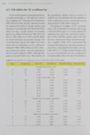
120 4. POPULATION STRUCTURE IN M. AVELLANARIUS 4.3. Life tables for M. avellanarius The mortality pattern in animal populations is usually presented as a life table for cohorts (e.g. Caughley 1977; Fleming 1979; Flowerdew 1987; Johnson 1994), but the …

Excerpt
initially high but rapidly decreases, followed by a postjuvenile phase characterized by initially low but steadily increasing rate of mortality. However, the pattern of changing mor- tality rate q, with age in M. avellanarius had a different character, as …
Excerpt
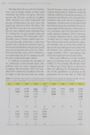
122 4. POPULATION STRUCTURE IN M. AVELLANARIUS Short age intervals, e.g. only 50 or 56 days, were used in similar studies of other small mammals (e.g. Rattus norvegicus, Microtus agrestis and Microtus orcadensis; Caughley 1966). Dormice are rather …

Excerpt
three-year-olds in 1989 was observed. The dormice born in 1984 and 1990 at site B had a rather high q, and short life span (Table 17). The character of q, curves varied a lit- tle between years: decreases in mortality rate q, were observed in some cases …

Excerpt
4. POPULATION STRUCTURE IN M. AVELLAN Table 18. Demographic composition of overwintered M. avellanarius which were recorded for the last time at study site A in different months in the period 2000-2012 April 6 0 6 38 15 53 59 16.2 May 85 17 102 26 24 50 …
Excerpt
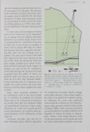
side the breeding period has been very lit- tle investigated in Lithuania. The decrease in the dormouse mortality rate in later parts of summer may be related to the increased abundance of other small mammals which are preyed upon by tawny owls in the …

Excerpt
126 4. POPULATION STRUCTURE IN M. AVELLANARIUS birds such as corvids (Corvidae). Inclement weather conditions (e.g. heavy rain or long lasting periods of rain) could also affect the survival of dormice, especially of females nursing a litter. Higher …

Excerpt
i siteA LJ site B 80 oO Do D> 60 S o © 40 ® a 20 0 LC) CO) fe OO ee ©) ON oO (CO CO CO OO nt COs ©) OOD) oO COG SON SO CO RCO REE os OOO? S See LO) es CO) Dm OC) aD (eo) (oe) (0) Go) (ee) (fo) (> ) (op) a CeO) ©) OO) Ome) a), aD 2 2 2 a 2 2000/01 2001/02 …

Excerpt
4. POPULATION STRUCTURE IN M. AVELLANARIUS Table 19. Winter mortality of M. avellanarius in separate demographic groups of two populations in Lithu- ania (site A in 1984-1989 and 1999-2007, site B in 1984-1992), with adults (ad), early litter juveniles …

Excerpt
4.4. MORTALITY Table 21. Comparison of average autumnal weight (+ SE) of successfully overwintered M. avellanarius and those presumed to have died during hibernation, with adults (ad), early litter (juy-I) and late litter (juy-II) juveniles distinguished …

Excerpt
130 4. POPULATION STRUCTURE IN M. AVELLANARIUS den (Berg & Berg 1999). Mortality rates were 43.6, 53.8, 45.2 and 65.5% in the respective demographic groups. However, the authors indicated that the estimates were compli- cated by edge effects and …

Excerpt
of the ground covered only by a thin layer of moss or leaves. Hibernating in such places makes animals vulnerable to floods, tram- pling and predation (Bright & Morris 1996). Predators can be a cause of high winter mortality among dormice as they can find …

Excerpt
132 4. POPULATION STRUCTURE IN M. AVELLANARIUS 4.5. Socio-spatial organisation in populations of M. avellanarius 4.5.1. Social structure in populations of M. avellanarius Adult M. avellanarius are sedentary and have permanent home ranges (Likhachev 1967b; …

Excerpt
range overlap in males than in females, as was found in Lithuania. Inverse results were obtained by radio- tracking in Britain. The home ranges of fe- male dormice overlapped more frequently and to a greater extent than those of males which seldom …

Excerpt
134 4. POPULATION STRUCTURE IN M. AVELLANARIUS and 0.5 ha for females) in poor habitats at sites in Cumbria and Northumberland (Bright & Morris 2008). Meanwhile, the close proximity of various woodland patches resulted in all necessary resources for nest- …

Excerpt
1973). According to Bright & Morris (1996), the occurrence of groups of dormice in nest- boxes suggests there may be a social dimen- sion to behaviour of M. avellanarius. Proportions of dormice found in nest- boxes solitary and in groups vary in differ- …

Excerpt
136 4. POPULATION STRUCTURE IN M. AVELLANARIUS one male possibly killed his neighbour while it was torpid (Juskaitis 2008a). In July, populations of M. avellanarius begin to include young-of-the-year that are already independent. When the population …

Excerpt
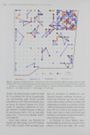
4.5.2. Movements of M. avellanarius Social structure, ranging and move- ment of M. avellanarius are closely interde- pendent, but because comparatively large amounts of data are available, movements of M. avellanarius are analyzed here in a sepa- rate …
Excerpt
138 4. POPULATION STRUCTURE IN M e …

Excerpt
distance climbed or descended by dormice would increase the actual distance trav- elled in a night. The mean vertical distance moved per night was 17 m and the great- est total vertical distance was 51 m. The maximum distance (measured as a straight line) …
Excerpt
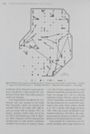
140 4. POPULATION STRUCTURE IN M A4VELLANARIUS 1 OF? @ 3 A 5 Fig. 73. Results of the capture of marked juvenile M. avellanarius at site B in July—October 1985. 1 — nestbox, 2 — capture of juvenile dormouse, 3 — marking of the litter, 4 - dispersal and …

Excerpt
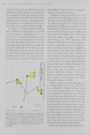
15 Percentage 0 100 200 300 400 500 255 20 5 Percentage 0 100 200 300 400 500 600 4.5. SOCIO-SPATIAL ORGANISATION 600 700 800 900 1000 1100 1200 T T T 1 1100 1200 T T T 700 800 900 1000 Fig. 74. Distances from natal site to recapture site moved by …
Excerpt
142 4. POPULATION STRUCTURE IN M. AVELLANARIUS of summer. However, juvenile males became sedentary later than females, i.e. in spring of the second year of their life, and the majority in mid-summer or as late as in autumn. Such differences may be due to …

Excerpt
located M. avellanarius were clearly averse to crossing even narrow gaps in hedgerows and remained in the hedgerows rather than move into surrounding non-corridor habi- tat. There was a highly significant difference in the frequency with which gaps of …