
Excerpt
84 3. ECOLOGY OF M. AVELLANARIUS Weight dynamics curves during the year and average weights of M. avellanarius in May-July (about 17-19 g) are rather similar in all investigated parts of the distributional range, including Lithuania (Juskaitis 2001c), …

Excerpt
3.8. INTERACTIONS WITH OTHER ANIMALS 40 4 35 4 30 4 25 4 20 5 > _ Lim | wel Aug-| Aug-!l (1 juv-08 i juv-06 [J adult females MJ adult males Sep-l Sep-ll Oct-I Fig. 41. Comparison of weights (mean + 2SD) in separate demographic groups of M. avellanarius in …
Excerpt
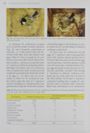
86 3. ECOLOGY OF M. AVELLANARIUS Fig. 42. Pied flycatchers (left) Lithuanian forests. In Lithuania, M. avellanarius occupied nests of pied flycatchers Ficedula hypoleuca (Fig. 42) most frequently, particularly in mid-May, i.e. in the period when the fly- …
Excerpt
3.8. INTERACTIONS WITH OTHER ANIMALS (n = 146) were found in nests of F. hypoleu- ca: males were found in 51.4% of cases, fe- males in 41.8%, males and females together in 6.8%. At site A, the percentage of F. hy- poleuca nests destroyed by M. …
Excerpt
88 3. ECOLOGY OF M. AVELLANARIUS animal origin. In Lithuania, M. avellanarius most often occupy unfinished nests of P. ma- jor, this containing only the moss layer and very little wool or hair or these nests are lined with vegetable fibre. Likhachev …

Excerpt
drag bird nests out (Juskaitis 1999c, 2010; Ulevicius & Juskaitis 2005). Insome cases, M. avellanarius themselves suffered from hole-nesting birds (Juskaitis 1995a). Nestboxes were reported several times to contain dead M. avellanarius with deep wounds to …
Excerpt
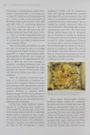
90 3. ECOLOGY OF M. AVELLANARIUS The presence of old dormouse nests in nest- boxes is associated with an increased per- centage of F. hypoleuca nests being destroyed (x°, = 14.0, p < 0.001). In the years when old dormouse nests were removed (1980-1982 and …
Excerpt
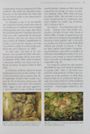
3.8. INTERACTIONS WITH OTHER ANIMALS building their nests not under the lid of the nestboxes, but inside the dormouse nests. However, in the nests there was room only for one hornet comb, so the insects had to leave the nestbox. In Lithuania at site A, in …
Excerpt
92 3. ECOLOGY OF M. AVELLANARIUS Competition between M. avellanarius and A. flavicollis occurs for nestboxes, not for territory. This can be proved by the fact that after two or three nestboxes were put up on some trees, in six cases both M. avellanarius …
Excerpt
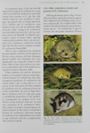
3.8. INTERACTIONS WITH OTHER ANIMALS In exceptional cases, G. glis can even kill and eat the young of M. avellanarius. Lozan (1970) wrote that M. avellanarius was found among food remains of G. glis, but only solitary instances were recorded. In Hun- …
Excerpt
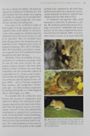
94 3. ECOLOGY OF M. AVELLANARIUS quercinus — were caught during one period of time in 1962 (Kratochvil 1967; Holisova 1968). All four dormouse species were also found in the northern Tirol (Schedl 1968), the Fichtel Mountains (Albrecht 1957), Ba- varia …
Excerpt
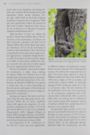
3.8. INTERACTIONS WITH OTHER ANIMALS tion for a natural tree hollow. He found an injured M. avellanarius at the base of a tree and assumed that this animal was sleeping in a hollow at a height of 12 m and had been expelled by a black woodpecker Dryocopus …
Excerpt
96 3. ECOLOGY OF M. AVELLANARIUS hazel crop is not abundant, nut-eating ani- mals can consume all the hazelnuts by early September. Birds, mostly thrushes Tur- dus spp., which feed on the fruits of glossy buckthorn Frangula alnus (Logminas 1990) may also …

Excerpt
3,8. INTERACTIONS WITH OTHER ANIMALS Table 12. List of predators in whose diet M. avellanarius were found Vipera aspis Vipera berus Elaphe longissima Strix aluco Tyto alba Asio otus Athene noctua Bubo bubo Glaucidium passerinum Aegolius funereus Strix …
Excerpt
98 3. ECOLOGY OF M. AVELLANARIUS fourth most abundant prey of S. aluco and composed 8.48% among 13 912 prey items (Obuch 2004). In higher mountainous zones and wetter areas of Slovakia, which are mostly covered with mixed conifer-deciduous for- ests or …
Excerpt
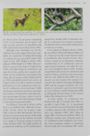
Fig. 50. Among mammalian predators, M. avellanarius was most often found in the diets of red fox and 3. INTERACTIONS WITH OTHER ANIMALS martens: a) red fox; b) pine marten (photos by V. Stirké). ten Martes foina (24 specimens comprising 6.15% of all …
Excerpt
100 3. ECOLOGY OF M. AVELLANARIUS should be noted that litters of dormice were present in eight of the nests. Two out of four juveniles of M. avellanarius were found among the nest remains inside one nestbox, while the main part of the nest was dragged …
Excerpt
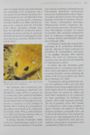
3.8. INTERACTIONS WITH OTHER ANIMALS total, 47 nymphs of ticks were removed from four individuals of M. avellanarius, and a new species of Lyme disease spirochete Bor- relia spielmanii sp. nov. was detected in ticks feeding on E. quercinus and M. …

Excerpt
102 4. Population structure, parameters and their dynamics in M. avellanarius 4.1. Population abundance and its dynamics in M. avellanarius 4.1.1. Population density in M. avellanarius To understand the dynamics of a popula- tion it is necessary to know …
Excerpt
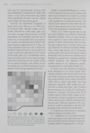
in different parts of its range and can reach a maximum of up to 15 ind./ha (Table 13). At study site A in Lithuania, the aver- age density of the M. avellanarius popula- tion was 1.0 + 0.2 ind./ha (n = 19) in spring and 3.1 + 0.7 ind./ha (n = 21) in …
Excerpt
104 4. POPULATION STRUCTURE IN M. AVELLANARIUS may also be overestimated, because they were estimated in comparatively small areas (only 1-2 ha), had no boundary strip added when calculating densities and the studies were of high-density nestbox grids. …

Excerpt
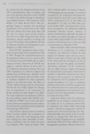
106 4. POPULATION STRUCTURE IN M. AVELLANARIUS M. avellanarius has disappeared from about half its geographical range in Britain, and one of the primary objectives of the NDMP is to detect any further change in abundance (e.g. Bright & Morris 1996; …

Excerpt
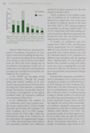
Population density, ind./ha 1988 fmm 1989 bo 1986 1987 1035 = co 1984 Population density, ind./ha 1984 1985 1986 1987 1988 1989 1990 1991 1992 4.1. ABUNDANCE AND ITS DYNAMICS [i] spring pe] autumn Fig. 54. Dynamics of the M. avellanarius population …
Excerpt
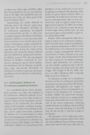
108 4. POPULATION STRUCTURE IN M — oO oO L) females Hi males © oO QD oO a oO Number of adult dormice nN oO 1956 1957 1958 1959 1960 1961 1962 Fig. 55. Numbers of adult M. avellanarius found in nestboxes at the study site in the south of the Mos- cow …
Excerpt
est edges may reflect edge suitability rather than total population size. In years with less food in the edges, the population may not decrease, but it may use other parts of the forest (Verbelyen 2012). Summarising, the results obtained in Lithuania and …
Excerpt
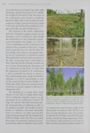
110 4. POPULATION STRUCTURE IN M. A\ tire understorey was cleared (Fig. 56b), adult dormouse density decreased to 0.1 adults/ ha in plots UF-99 and UF-00. No litters of M. avellanarius were found in nestboxes placed in either plot. In the second year sub- …

Excerpt
015 = 0.5 no D aes Obes Dens Die D> seOr OD ve OD Open Onee OO UO, Oo | LORD gee te OLA (Oe MOL Suen) ip TH OT OO OG DMO On HORS OOD Oes 12 One os eee = CN CO tu Oe OE) Fig. 57. Dynamics of adult M. avellanarius densities in the plots UF-99 (area ~ 12 ha) …
Excerpt
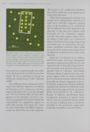
112 4. POPULATION STRUCTURE IN M. AVELLANARI Fig. 59. Numbers of M. avellanarius found in nest- boxes situated in an overgrown clearing in plot CF-02 (white outline) and in adjacent forest stands at site A during a single nestbox control in Septem- ber …
Excerpt
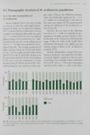
4.2. DEMOGRAPHIC STRUCTURI 4.2. Demographic structure of M. avellanarius populations 4.2.1. Sex ratio in populations of M. avellanarius Most vertebrates have a sex ratio at birth so close to 1:1 that the usual slight prepon- derance of males can be …