
Excerpt
176 Kęstutis Kilkus. Dimiktinių ežerų terminės struktūros Fig. 18. Temperature profile of Jaurys Lake, 09.06.1988. D = 16 m, D„=2.2m, D„= 7m, Tyg, = 3.2°Cim, T, = 4.6C, D; - 4.6m, Col = 8 No, A = 0.226 km2, F = 0.48 km, D, = 3%. The lake lies in …
Excerpt
A ted from wind-induced mixing. Sublacustrine groundwater seepage forms the major source of water flow into the lakes and the Adomaitis Lake, especially. Fig. 24. Location of lakes in the upper reaches of Virinta River. Fig. 25. Temperature profiles of …
Excerpt
178 Kęstutis Kilkus. Dimiktinių ežerų terminės struktūros Col = 12 No). Outflowing lake locating in the deepest segment of above mentio- ned rinnen depression. The slopes are steep and high, especially at the forested eastern shore, so the lake is well …
Excerpt
179 Fig. 36. Temperature profiles of Sirvydziukas Lake (curve 1; D = 4.4 m, D,, = 1.2m, Dy ~ till the bottom, Ty,, = 3.4°C/m, T,, = 8.6°C, Dy = 1.5 m, Col = 16 No, A = 0.006 km?, F = 0.08 km, D, _ 5%) and Laubinukas Lake (cur- ve 2; D = 4.6m, D,,; = 2m, …
Excerpt
180 Kęstutis Kilkus. Dimiktinių ežerų terminės struktūros D, = 0.9m, Dy = 4.6 m, Ty,, - 5.1°C/m, T, = 3.6°C, D, = 0.5 m, Col = 11-12 No). The outflowing lake of evorsive origin. Agricultural plots, pastures and shrubs predominate in near-shore environs. …
Excerpt
181 Fig. 49. Temperature profiles of ESeris Lake (curve 1; D = 2m, D,, - till the bottom, D, — till the bottom, Col = 21 No, A = 0.012 km?, F = 0.11 km, D, = 1.6%) and Lauja Lake (curve 2; D = 5 m, D; = 2m, D,„- till the bottom, Typ = 19“C/m, T, = 151C, …
Excerpt
182 Kęstutis Kilkus. Dimiktinių ežerų terminės struktūros Fig. 53. Temperature profiles of Balažeris Lake (curve 1; D = 2.3 m, D, — lacking, Dy, — till the bottom, T,,., = 2.2°C/m, T,, = 14.2°C, D, - till the bottom, A = 0.031 km?, F = 0.18 km, D, = 1.2%) …
Excerpt
183 flooded by Nemunas River water. Especially thin ice cover and warm hipolim- nion in winter indicate the inseepage of groundwater. Fig. 58. Temperature profile of small nameless lake locating in the forest to the east from Kuleinis Lake, 04.07.1991. D …
Excerpt
184 Kęstutis Kilkus. Dinuktinių ežerų terminės struktūros Fig. 64. Temperature profiles of Ilgeliy Lake (curve 1; D = 5 m, D, = 2.4m, D,, — till the bottom, Tuer = 4.1°C/m, T, _ 10.0°C, D, = 1.8m, Col = 18 No, A = 0.027 km?, F = 0.16 km, D, = 2.7%) and …
Excerpt
185 Fig. 71. Temperature profiles of Skiliety I Lake (curve 1;D = 17m,D r=3m, Dy = 6m, Typ, = 3.5*C/m, T, = 44*C, D; = 2.7 m, Col = 15 No,A = 0.46 km?, F = 0.68 km, D, = 2.2%) and Skiliety II Lake (curve 2; D = 15 m, D,, = 2.6 m, Dy = 6m, Ty,, = 3.2°C/m, …
Excerpt
186 Kęstutis Kilkus. Dimiktinių ežerų terminės struktūros F = 0.09 km, D, = 5.6%), 12.02.1988. Artificial lakes locating in clay-pits. Inse- epaging groundwater influences the temperatures near the bottom. Fig. 81. Temperature profiles of Lake No 4 (curve …
Excerpt
187 boggy and protected from the wind by forest. The Pragarinis Lake locates in deep kettle depresion. Fig. 87. Location of small lakes in Seimatis-Varniskés-Stripeikiai environs. Fig. 88. Temperature profiles of Lugas Lake (curve 1; D = 1 m, D,, - lac- …
Excerpt
188 Kęstutis Kilkus. Dimiktinių ežerų terminės struktūros Fig. 95. Temperature profiles of Druskinélis Lake (A = 0.0008 km2, F = 0.03 km, D, = 11.9%), 19.06.1974 (curve 1; D = 3 m, D,, = 1.5 m, D,,- till the bottom, Ty, = 3.3°C/m, T, _ 14.9°C ), …
Excerpt
189 till the bottom, age = 8.3°C/m, T, _ 9.3°C;7—D = 4.1 m,D,,_1.9m,D,, = 3m, Ter = 4-5°Chm, T,, = 7.1°C; 8—D.= 5.2m, D, = 2.1m, Dy, = 3.2m, Tur TSC] m, 7, = 6.0°C; 9-D = 4.3 m;D;, _2m, Dy = 3.5 m, Ty, = 5.7°C, T, = 7.2°C; 10 - D=5.5m, D;,= 2m, Dy = 3.5m, …
Excerpt
190 Kęstutis Kilkus. Dimiktinių ežerų terminės struktūros rain-storm J = 25 mm/hour. Old sink is deprived of relationship with ground- water table. Fig. 104. Temperature profiles of Švendrelis Lake (A = 0.0005 km?, F = 0.022 km, D, = 11.9- 14.7%), …
Excerpt
191 Fig. 115. Relationship between the depth of lower boundary of metalim- nion and Secchi depth (explained in Fig. 112). Fig. 116. Relationship between temperature gradient of metalimnion stra- tum and Secchi depth (explained in Fig. 112). Fig. 117. …
Excerpt
192 Kęstutis Kilkus. Dimiktinių ežerų terminės struktūros Fig. 130. Relationship between the depth of lower boundary of metalim- nion and mean fetch (all lakes are included). Fig. 131. Relationship between the depth of lower boundary of metalim- nion and …
Excerpt
193 Fig. 144. Relationship between water temperature near the bottom in win- ter (February of 1962) and relative depth (from data of Chomskis and others, explained in Table 3). Fig. 145. Relationship between water temperature near the bottom in winter and …
Excerpt
194 Kęstutis Kilkus. Dimiktinių ežerų terminės struktūros Fig. 157. Schematic picture of the general density-induced circulation du- ring spring in a large temperate lake, a) primary circulation, b) secondary cir- culation (from Malm, 1994). Fig. 158. …
Excerpt
195 Fig. 168. Temperature distribution in Pliaušys Lake (Aukštaitija National Park) in 21 January, 1980. Temperature section from NW to SE, horizontal distance 150 m. Fig.169. Temperature distribution in Duobulis Lake (Lakaja River catchment) in 27 …
Excerpt
196 Kęstutis Kilkus. Dimiktinių ežerų terminės struktūros Fig. 178. Temperature distribution in Virintai Lake (Molėtai District), 2 June of 1988. Temperature section along the major axis (from W to E), the wind of W direction prevailed. Fig. 179. …
Excerpt
197 circles belong to September-December period (the data of Lithuanian Hydrometeorological Survey are used). Fig. 189. Isopleths of water surface temperature in Drūkšiai Lake: a —wind of W direction, velocity 1 m/s, 9 August of 1984; b — wind of NE …
Excerpt
198 Kestutis Kilkus. Dimiktinių ežerų terminės struktūros Table 11. Lakes exhibiting water temperature near the bottom in summer less as 4°C. Values of factors favourable for spring meromixis are given in bold font. Italics is used when values of …
Excerpt
Ežerų vertikaliosios terminės struktūros (VTS) 99 2.1.2. VTS ir pliuvijinė sąmaiša Apie lietaus lašų sukeliamą ežero paviršinio vandens sluoksnio mecha- ninę sąmaišą žinoma labai nedaug, galbūt todėl, kad ji vyksta kartu su vėjo sąmaiša, kuri yra …
Excerpt
100 Kęstutis Kilkus. Dimiktinių ežerų terminės struktūros maisto medžiagų regeneraciją, taigi ir biologinę produkciją (Patalas, 1961; Fee, 1979; Szumiec, 1982). Ši sąmaišos rūšis kartais vadinama dinamine sąmaiša (Chomskis, 1969 a), nors griežtai kalbant, …
Excerpt
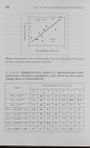
žerų vertikaliosios terminės struktūros (VTS) 101 Ilgėjant vėjo įsibėgėjimo keliui F, didėja bangų aukštis, o įvairias sub- stancijas ir šilumą pernešantys turbulentiniai sūkuriai pasiekia didesnį gylį — vystosi epilimnijonas. Jau šio amžiaus ketvirtajame …
Excerpt
102 Kęstutis Kilkus. Dimiktinių ežerų terminės struktūros Epilimnijono storis, m 10 Vėjo įsibėgėjimo kelias, km 126 pav. Epilimnijono storio priklausomybė nuo vėjo įsibėgėjimo kelio pagal vidutinius daugiamečius duomenis (5 lentelė) 10 lentelė. …
Excerpt
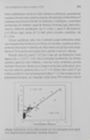
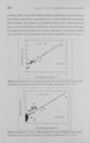
žerų vertikaliosios terminės struktūros (VTS) 103 tintas epilimnijono storis yra labai artimas rezultatams, gaunamiems naudojant beveik visas anksčiau minėtų autorių lygtis, tačiau kituose F reikšmių intervaluose ši dermė yra mažesnė, o nuokrypiai - …
Excerpt
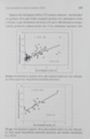
104 Kęstutis Kilkus. Dimiktinių ežerų terminės struktūros pradžioje. Kita vertus, konvekcinės kilmės epilimnijono storis priklauso nuo vandens skaidrumo, tad reikšmė D „= 2 m yra didelę įvairovę atspin- dintis vidurkis. Šitai matyti D. priklausomybėse nuo …
Excerpt
Ežerų vertikaliosios terminės struktūros (VTS) 105 Ilgėjant vėjo įsibėgėjimo keliui, VTS antrojo elemento - metalimnijo- no apatinės ribos gylis didėja nelyginti sparčiau nei epilimnijono storis (130 pav.), ypač skaidriuose ežeruose (131 pav.). …