
Excerpt
24 3. ECOLOGY OF M. AVELLANARIUS 2012; S. Buchner & J. Lang, unpublished). M. avellanarius have habitat require- ments that may be met by coppice woodland management (Bright & Morris 1990, 1996, 2005; Bright et al. 2006). In effect, coppicing maintains an …

Excerpt
rally and understorey develops in the gaps thus formed (Juskaitis & Siozinyté 2008). Many researchers (e.g. Lozan 1970; Gaisler et al. 1977; Andéra 1987; Faltin 1988; Bako et al. 1998; Jurczyszyn & Wolk 1998; Hecker et al. 2003a) who studied the …

Excerpt
26 3. ECOLOGY OF M. AVELLANARIUS dwarf pine Pinus mugo stands in the subalpine belt of the western Tatra Mountains, at about 1600 m a.s.]. (Miklos & Buchamerova 2004). Records of M. avellanarius in subalpine dwarf pine forests also exist in other areas …

Excerpt
with early successional stages of forest stand formation (16% in overgrown clearings and 5% in young spruce plantations). Among forest stands, 39% of M. avellanarius locali- ties were situated in forest stands dominated by spruce, 20% in birch-dominated …
Excerpt
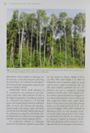
28 3. ECOLOGY OF M. AVELLANARIUS Fig. 1 13. Mixed eer Hoa a with Norway spruce and hazel in the understorey at uty site A - one of the typical habitats of M. avellanarius in Lithuania. plantations, some overgrown clearings, wil- low Salix sp. scrub and …
Excerpt
M. avellanarius can still be found in such habitats, especially when they occupy small areas and are surrounded by other more suitable habitats (JuSkaitis 2007b). The four plants most associated with M. avellanarius in Britain are hazel, oak, honeysuckle …

Excerpt
30 3. ECOLOGY OF M. AVELLANARIUS nian forests, but they are not widespread. Honeysuckle L. periclymenum is absent from Lithuanian forests, but another spe- cies of honeysuckle L. xylosteum (a spherical shrub up to 2-3 m high) is present in Lithua- nia …

Excerpt
adult per hectare (Juskaitis 2003a, 2008a), a comparatively low figure when compared to the average densities of 2.2-3.5 adults/ha in Great Britain for example (Bright et al. 2006, Bright & Morris 2008), possibly indicating a lower quality of dormouse …

Excerpt
32 3. ECOLOGY OF M. AVELLANARIUS 3.2. Nests and nest sites of M. avellanarius 3.2.1. Summer nests of M. avellanarius During its summer activity period, M. avellanarius build tightly woven ball- shaped nests with an entrance hole on the side, but the …
Excerpt
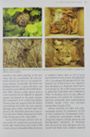
ee i ay ani 3.2. NESTS AND NEST SITES Fig. 15. Different types of nests of M. avellanarius: a) ited nest; b) geet nest in aernee Cc) grassy nest; d) foliar nest in nestbox. stricted to the plants growing in the area where they live, nevertheless the nest …

Excerpt
34 3. ECOLOGY OF M. AVELLANARIUS groups used by M. avellanarius (Vilhelmsen 1996). In Sweden, the characteristic nests of M. avellanarius were woven with grass, leaves, ferns and strips of bark from juniper Juniperus communis or honeysuckle Lon- icera …

Excerpt
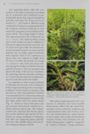
lanarius and they can both be found in over- grown clearings in the forests (JuSkaitis & Remeisis 2007a). Wren nests may also some- times be similar to M. avellanarius nests (Berg 1996; Bright et al. 2006). According to Kahmann & Frisch (1950), the number …
Excerpt
36 3. ECOLOGY OF M. AVELLANARIUS Nest supporting plants reflect the com- position of the plant community, but within this M. avellanarius show preference to par- ticular plant species that support and hide the nests best. More than 70% of nests of M. …
Excerpt
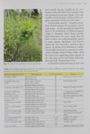
A: Fig. 17. Nest of M. avellanarius in young oak tree. 3.2. NESTS AND NEST SITES trees usually become suitable for M. avel- lanarius nests after they have lost their tops and sprouted several new shoots. Tree tops could be cut by humans or bitten off by …

Excerpt
38 3. ECOLOGY OF M. AVELLANARIUS of M. avellanarius in Great Britain present- ed by Hurrell & McIntosh (1984) could be biased, because they were based on simple human search in different habitats, which might include also high canopy trees. Radio- …

Excerpt
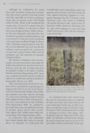
different young woodlands in Lithuania (ex- cluding data from the overgrown clearing at site A). In total, 43% of M. avellanarius nests found were situated in the height range 0.6— 1.0 m above ground (Fig. 18). In general, the average height of nests …
Excerpt
40 3. ECOLOGY OF M. AVELLANARIUS Although M. avellanarius do weave their nests in bushes, young trees or bram- bles, they seem to prefer to use more secure nest sites, especially tree holes or nestboxes, where they are present (Lozan 1970; Bright & Morris …

Excerpt
nests). M. avellanarius have also been found making their own nests inside old nests of magpies Pica pica (Hurrell & McIntosh 1984; Fuchs 1987; Gatter & Schiitt 1999) and wrens Troglodytes troglodytes (Berthold & Querner 1986; Eden 2009; S. Biichner, …

Excerpt
42 3. ECOLOGY OF M. AVELLANARIUS Eden (2009) succeeded in finding several dormouse hibernation nests in Dorset. They were also about the size of a tennis ball and were more tightly woven then summer nests with no sign of an entrance hole. The nests were …

Excerpt
accidentally inside a hollow spruce tree root (L. Skérys, pers. comm.). Another winter nest of M. avellanarius was found in a small depression in a meadow near a small wood, the top of the nest visible (P. Bluzma, pers. comm.). Eden (2009) described many …
Excerpt
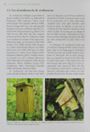
44 3. ECOLOGY OF M. AVELLANARIUS 3.3. Use of nestboxes by M. avellanarius M. avellanarius willingly occupy both or- dinary nestboxes for birds (e.g. Pielowski & Wasilewski 1960; Likhachev 1967a; Lozan 1970; Schulze 1973; Juskaitis 1997b, d, 1999c; Henze & …
Excerpt
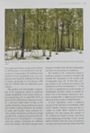
i fs » Ss Fig. 22. The first M. avellanarius are found in nestboxes when parts of the forest floor are still covered with snow. have appeared in boxes at the end of March in 1983 because 12 M. avellanarius were de- tected on 3-4 April when 325 nestboxes …

Excerpt
46 3. ECOLOGY OF M. AVELLANARIUS oa oO , HB adults [juveniles NO wo Oo oO oO L 1 1 Number of dormice / 100 nestboxes 5 04 Apr-! Apr-il May-l May-ll Jun-! Jun-ll Jul-l Jul-Il Aug-| Aug-Il Sep-l Sep-ll Oct-I Oct-Il Nov-I Fig. 23. Dynamics of the average …

Excerpt
Neseniai gavę invalidumą savarankiškai vaikščioja mažiau negu 1987 m. apklaustieji. Beveik 3294 apklaustųjų be palydovo vaikšto tik bute ir namo kieme. Nežinomu maršrutu (kituose kaimuose ir miestuose), 1969 m. duomenimis, galė- jo vaikščioti 24,190, 1987 …

Excerpt
10.2 lentelė. Atskirų imčių apklaustųjų pasiskirstymas pagal įvairių sričių pagalbininkus procentais Sutrikusio regėjimo žogaus pagalbininkai sa Atsi- | Šeimos | Ben- | Kai- T Apklaustųjų imtis Niekas | tikti- | nariai | drą- | mynai | sociali- ij nepa- | …
Excerpt
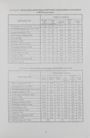
10.4 lentelė. Atskirų imčių apklaustųjų pasiskirstymas pagal galėjimą savarankiškai vaikščioti procentais Galėjimas vaikščioti Apklaustųjų imtis Negali | Negali | Gali su Salou AS Setas del dėl palydovu palią dyta sveikatos | regėjimo 1.Invalidumas iki 5 …

Excerpt
3 (n=264) 27,20 4 (n=462) 51,06 i 1 (n=109) 12065 2 (n=62) 6906 “ Nenurodyta (n=26) 2,94 1 - negali dėl blogos sveikatos 2- negali dėl blogo regėjimo 3 - gali tik su palydovu 4- gali be palydovo 10.1 pav. 905 apklaustųjų pasiskirstymo paga! galėjimą …

Excerpt
11. LAISVALAIKIS Esminių sutrikusio „asų žmonių laisvalaikio struktūros pokyčių per pasta- ruosius 25 metus neįvyko/ Be abejo, dėl socialinių, politinių ir ekonominių pokyčių kei- tėsi laisvalaikio turinys, politinė ir socialinė jo orientacija. Dėl ribotų …

Excerpt
„„PIJIASIADS,, DUK) M 696] - « ž 8 2 Es L'0 m EG Žž 6PI | 99 | L 19 (01150) seujiKi UI 6961 SĮ LLS 001 [P |) EE | 22468 |2001 | 9lEva PS [298 |EREES| 34 |Zo0r || -otof | 002 | 9 (06=U) skiuPga pį SEA S ES 66 [L TTL E SOTa| STI | EB E SE aga | 7088 |ŽO GI …

Excerpt
12. TURIMA IR PAGEIDAUJAMA TIFLOTECHNIKA 12.1.Turima tiflotechnika 1995 m. apklaustieji šiek tiek daugiau turėjo akinių, linzių, lupų, okuliarų, laikro- džių, rašymo Brailio raštu priemonių (12.1 lentelė). 1987 m. apklausos duomenimis, res- pondentai …