
Excerpt
Tuvės Janson kūrybos keistas pasaulis Lasa aaananaaak ana 3 2. Biografijos metmenys, kūrybos genezė, raidos bruožai ..... 5 3. Knygos apie Mumių pasaulį. Kia Age A A AL S e a 9 3.2. Siužetų modeliavimas, žanrinė konvencija pirmosiose RE nuo Šia i sanasia …


Excerpt
Rimvydas Juskaitis The Common Dormouse Muscardinus avellanarius: Ecology, Population Structure and Dynamics Second edition …



Excerpt
Rimvydas JuSkaitis The Common Dormouse Muscardinus avellanarius: Ecology, Population Structure and Dynamics Second edition Vilnius, …

Excerpt
UDK 599(474.5) Ju277 MOKkKSLAS - EKONOMIKA: SANGLAUDA EUROPOS SAJUNGA EUROPOS SOCIALINIS FONDAS Kuriame Lietuvos ateiti Preparation and publication of this monograph was funded by the European Social Fund under the Global Grant measure (grant No. …

Excerpt
Contents Prefaceyam clea Gk Wile oe rin ei fs eee see ete seree eee eae rerresrancnanteceacaenenes reer cert teerteetereerseeeereerer eee 5 Introduction (xe See eee arereet crescent rte enone +7 I Revie w,OHStUGiestonw/ Maavell ar cnet spiny EO PC …

Excerpt
4.4, Mortality in populations of M. avellanarius 123 4.4.1. Summer mortality in populations of M. avellanarius ....c..cccsssssssssssssssssssessssseesssseee 123 4.4.2. Winter mortality in populations of M. avellanarius …
Excerpt
Preface and acknowledgements Published in 2008, the first edition of the present monograph (Juskaitis 2008a) was produced in relatively small numbers and was already out of print within a year. How- ever, as studies of the common dormouse Muscardinus …
Excerpt
6 PREFACE AND ACKNOWLEDGEMENTS by A. E. Airapetyants was very helpful dur- ing the first stage of my studies on M. avel- lanarius in 1984-1990. M. Zalakeviéius, the former Director of the Nature Research Centre and former Institute of Ecology, created …
Excerpt
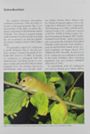
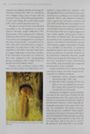
Introduction The common dormouse Muscardinus avellanarius (Linnaeus, 1758), also often re- ferred to as the hazel dormouse (Fig. 1), is a representative of the order of rodents (Ro- dentia) and belongs to the dormouse family (Gliridae). This animal is …
Excerpt
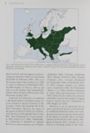
8 INTRODUCTION Fig. 2. The distributional range of M. avellanarius (according to Juskaitis & Biichner 2013, updated) and the geographical position of Lithuania (white outline) within this range. Note: dormouse reintroduction sites in Britain are not …
Excerpt
western part of its range, while in the rest of the range it is considered stable (Juskaitis & Biichner 2013). Habitat loss due to deforestation, when farmland, urban development, roads and other forms of unsuitable habitat replace po- tentially good …
Excerpt
1. Review of studies on M. avellanarius in Europe M. avellanarius has been the subject of many studies carried out in different parts of its range, including distribution studies in Austria (Spitzenberger 1983), Belgium (Li- bois 1980), Croatia (Tvrtkovié …
Excerpt
1. REVIEW OF STUDIES ON M. AVELLANARIUS monitoring (Sanderson 2004; White 2012) and reintroductions (Oxford 2007; Mitchell- Jones & White 2009; Chanin 2014). Many other studies on M. avellanarius have ad- ditionally been carried out in Britain during the …
Excerpt
12 1. REVIEW OF STUDIES ON M. AVELLANARIUS The influence of habitat loss and fragmenta- tion on M. avellanarius has also been stud- ied recently (Mortelliti et al. 2009, 2011; Zapponi et al. 2013). Some other aspects of the ecology of M. avellanarius have …
Excerpt
1. REVIEW OF STUDIES ON M. AVELLANARIUS b, c). The influence of high nestbox densities (Juskaitis 2005b) and methodological aspects of the use of nestbox grids in population studies of M. avellanarius have also been an- alysed (Juskaitis 2006b). During …
Excerpt
2. Study areas in Lithuania, material and methods 2.1. Environmental conditions in Lithuania Lithuania (area 65 300 km?) is situated on the Baltic Sea (see Fig. 2 in page 8) and lies in the transition region between the West Euro- pean maritime and East …
Excerpt
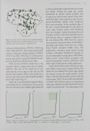
Fig. 3. Localities of M. avellanariusin Lithuania and lo- cations of study sites A and B (mapped on 10 = 10 km squares of the national grid “Lithuania-94”). Lithuania, Sakiai district; 55°03’N, 23°04’E) in 1984-1990 and 1997-2013, and at study site B …
Excerpt
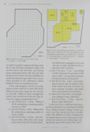
2. STUDY AREAS IN LITHUANIA AND METHODS Fig. 5. Scheme of study site B in 1985-1993. 1 — nestbox, 2 — forest edge. est stands occupied comparatively large areas: 40-50 year-old aspen-dominated stands with Norway spruce, oak and birch, and Norway …
Excerpt
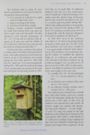
The methods used to study M. avel- lanarius populations were based on the fol- lowing three main principles: 1) even spacing of nestboxes in a grid system in large forest areas; 2) regular checking of the boxes; 3) marking of all dormice caught. Ordinary …
Excerpt
18 2. STUDY AREAS IN LITHUANIA AND METHODS animals were weighed and their sex and age de- termined. During 1981-1993, M. avellanarius were weighted using a pair of scales with the precision of 0.1 g. 100 g and 60 g spring balanc- es were used during the …
Excerpt
or the entire tail lost. However, irrespective of the length of the lost part of their tail, all such animals were called “tail-less” dormice. Condition of the wound in the tail and its regrowth with hair were evaluated for esti- mating how long before …
Excerpt
20 2. STUDY AREAS IN LITHUANIA AND METHODS (16 x 8 x 8cm) were fixed on horizontal branch- es or tree trunks using sticky tape at a height of 1-2 m. Hazelnut kernels and pieces of apple were used as bait. The total trapping effort was 1750 trap nights, …
Excerpt
3. Ecology of M. avellanarius 3.1. Habitats of M. avellanarius 3.1.1. Main features of M. avellanarius habitats within its distributional range In different parts of its comparatively large distributional range, environmental conditions for M. …
Excerpt
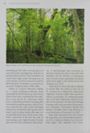
3. ECOLOGY OF M. AVELLANARIUS Fig. 9. Habitat of M. avellanarius in oak woodland with hazel in Lithuania. sprawling growth habit, ensuring plenty of near-horizontal interdigitating branches to facilitate arboreal travel. Such conditions are found where …
Excerpt
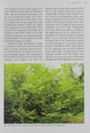
1970; Hurel & McIntosh 1984; Capizzi et al. 2002; Vilhelmsen 2003; Juskaitis & Siozinyté 2008). The best-developed understorey usu- ally occurs around forest edges, and M. avel- lanarius were often found at the edges of for- ests or glades (Fig. 10) and …