

Excerpt
102 4. Population structure, parameters and their dynamics in M. avellanarius 4.1. Population abundance and its dynamics in M. avellanarius 4.1.1. Population density in M. avellanarius To understand the dynamics of a popula- tion it is necessary to know …

Excerpt
in different parts of its range and can reach a maximum of up to 15 ind./ha (Table 13). At study site A in Lithuania, the aver- age density of the M. avellanarius popula- tion was 1.0 + 0.2 ind./ha (n = 19) in spring and 3.1 + 0.7 ind./ha (n = 21) in …
Excerpt
104 4. POPULATION STRUCTURE IN M. AVELLANARIUS may also be overestimated, because they were estimated in comparatively small areas (only 1-2 ha), had no boundary strip added when calculating densities and the studies were of high-density nestbox grids. …


Excerpt
106 4. POPULATION STRUCTURE IN M. AVELLANARIUS M. avellanarius has disappeared from about half its geographical range in Britain, and one of the primary objectives of the NDMP is to detect any further change in abundance (e.g. Bright & Morris 1996; …

Excerpt
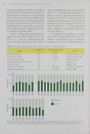
Population density, ind./ha 1988 fmm 1989 bo 1986 1987 1035 = co 1984 Population density, ind./ha 1984 1985 1986 1987 1988 1989 1990 1991 1992 4.1. ABUNDANCE AND ITS DYNAMICS [i] spring pe] autumn Fig. 54. Dynamics of the M. avellanarius population …

Excerpt
108 4. POPULATION STRUCTURE IN M — oO oO L) females Hi males © oO QD oO a oO Number of adult dormice nN oO 1956 1957 1958 1959 1960 1961 1962 Fig. 55. Numbers of adult M. avellanarius found in nestboxes at the study site in the south of the Mos- cow …

Excerpt
est edges may reflect edge suitability rather than total population size. In years with less food in the edges, the population may not decrease, but it may use other parts of the forest (Verbelyen 2012). Summarising, the results obtained in Lithuania and …
Excerpt
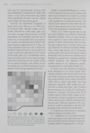
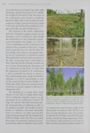
110 4. POPULATION STRUCTURE IN M. A\ tire understorey was cleared (Fig. 56b), adult dormouse density decreased to 0.1 adults/ ha in plots UF-99 and UF-00. No litters of M. avellanarius were found in nestboxes placed in either plot. In the second year sub- …

Excerpt
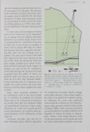
015 = 0.5 no D aes Obes Dens Die D> seOr OD ve OD Open Onee OO UO, Oo | LORD gee te OLA (Oe MOL Suen) ip TH OT OO OG DMO On HORS OOD Oes 12 One os eee = CN CO tu Oe OE) Fig. 57. Dynamics of adult M. avellanarius densities in the plots UF-99 (area ~ 12 ha) …
Excerpt
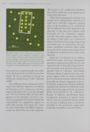
112 4. POPULATION STRUCTURE IN M. AVELLANARI Fig. 59. Numbers of M. avellanarius found in nest- boxes situated in an overgrown clearing in plot CF-02 (white outline) and in adjacent forest stands at site A during a single nestbox control in Septem- ber …
Excerpt
4.2. DEMOGRAPHIC STRUCTURI 4.2. Demographic structure of M. avellanarius populations 4.2.1. Sex ratio in populations of M. avellanarius Most vertebrates have a sex ratio at birth so close to 1:1 that the usual slight prepon- derance of males can be …
Excerpt
114 4. POPULATION STRUCTURE IN M cow region (Likhachev 1966b). According to Schulze (1973), the proportion of males in the South Harz Mountains increased from 48% in litters to 50% among independent young-of-the-year and to 60% among adults. However, the …

Excerpt
4.2. DEMOGRAPHIC STRUCTURE Table 15. Sex ratio among adult M. avellanarius in different regions The Alps, Germany SBr/ - 123 Kahmann & Frisch 1950 Tula region, Russia 52.9 46.7-55.3 155 Likhachev 1954 Moscow region, Russia 56.2 40-64 306 Likhachev 1966b …

Excerpt
116 4. POPULATION STRUCTURE IN M male proportion in the population (r, = 0.75, p> 0.05, n=7; calculated from data presented in Likhachev 1966b). In Lithuania, the same tendency was obvious among three data sets: the lowest average proportion of males …

Excerpt
dormice contributed 67-70% of individu- als, two-year-olds 20-23%, three-year-olds 5-8%, and four-six-year-olds 1-4% in the populations investigated in Lithuania and in the Moscow region. Age structure in adult males and females was very similar at site A …
Excerpt
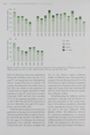
118 4. POPULATION STRUCTURE IN M. AVELLANARIUS Number of dormice caught | 203, (sr a | 1988 i 2002 a Number of dormice caught — 1990 | | 1989 1991 | 1992 ad || | | he a vr wo oO y ao aD Sos N oO co So So So oOo oS oOo x, = _ ro) OOF 4OOF. oO Oo) oO On Oo …

Excerpt
250, a No So oO Number of dormice caught oy oe oe o 14 | 1985 | 1986 | oe7 | a 28 | 7 009 | 7 1999 | 2000 | a7 a | 2002 | a 2005 150 100 - 505 0 T lo oO > ) Number of dormice caught T T 1066 | 1988 | ay 0609 | a 1 1991 | _ © a = So aD a 1984 1992 4.2. …
Excerpt
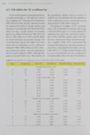
120 4. POPULATION STRUCTURE IN M. AVELLANARIUS 4.3. Life tables for M. avellanarius The mortality pattern in animal populations is usually presented as a life table for cohorts (e.g. Caughley 1977; Fleming 1979; Flowerdew 1987; Johnson 1994), but the …
Excerpt
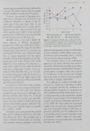
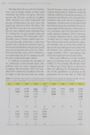
initially high but rapidly decreases, followed by a postjuvenile phase characterized by initially low but steadily increasing rate of mortality. However, the pattern of changing mor- tality rate q, with age in M. avellanarius had a different character, as …
Excerpt
122 4. POPULATION STRUCTURE IN M. AVELLANARIUS Short age intervals, e.g. only 50 or 56 days, were used in similar studies of other small mammals (e.g. Rattus norvegicus, Microtus agrestis and Microtus orcadensis; Caughley 1966). Dormice are rather …
Excerpt
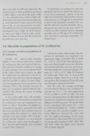
three-year-olds in 1989 was observed. The dormice born in 1984 and 1990 at site B had a rather high q, and short life span (Table 17). The character of q, curves varied a lit- tle between years: decreases in mortality rate q, were observed in some cases …

Excerpt
4. POPULATION STRUCTURE IN M. AVELLAN Table 18. Demographic composition of overwintered M. avellanarius which were recorded for the last time at study site A in different months in the period 2000-2012 April 6 0 6 38 15 53 59 16.2 May 85 17 102 26 24 50 …
Excerpt
side the breeding period has been very lit- tle investigated in Lithuania. The decrease in the dormouse mortality rate in later parts of summer may be related to the increased abundance of other small mammals which are preyed upon by tawny owls in the …

Excerpt
126 4. POPULATION STRUCTURE IN M. AVELLANARIUS birds such as corvids (Corvidae). Inclement weather conditions (e.g. heavy rain or long lasting periods of rain) could also affect the survival of dormice, especially of females nursing a litter. Higher …
Excerpt
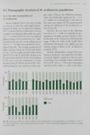
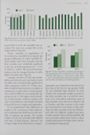
i siteA LJ site B 80 oO Do D> 60 S o © 40 ® a 20 0 LC) CO) fe OO ee ©) ON oO (CO CO CO OO nt COs ©) OOD) oO COG SON SO CO RCO REE os OOO? S See LO) es CO) Dm OC) aD (eo) (oe) (0) Go) (ee) (fo) (> ) (op) a CeO) ©) OO) Ome) a), aD 2 2 2 a 2 2000/01 2001/02 …
Excerpt
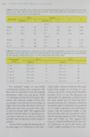
4. POPULATION STRUCTURE IN M. AVELLANARIUS Table 19. Winter mortality of M. avellanarius in separate demographic groups of two populations in Lithu- ania (site A in 1984-1989 and 1999-2007, site B in 1984-1992), with adults (ad), early litter juveniles …
Excerpt
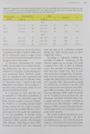
4.4. MORTALITY Table 21. Comparison of average autumnal weight (+ SE) of successfully overwintered M. avellanarius and those presumed to have died during hibernation, with adults (ad), early litter (juy-I) and late litter (juy-II) juveniles distinguished …

Excerpt
130 4. POPULATION STRUCTURE IN M. AVELLANARIUS den (Berg & Berg 1999). Mortality rates were 43.6, 53.8, 45.2 and 65.5% in the respective demographic groups. However, the authors indicated that the estimates were compli- cated by edge effects and …
Excerpt
of the ground covered only by a thin layer of moss or leaves. Hibernating in such places makes animals vulnerable to floods, tram- pling and predation (Bright & Morris 1996). Predators can be a cause of high winter mortality among dormice as they can find …