
Excerpt
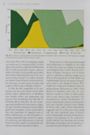
72 3. ECOLOGY OF M. AVELLANARIUS 100 80 Percentage 20 0 Apr-| Apr-ll May-! May-Il Jun-! Jun-ll G@ Animal origin M& Inflorescences Jul-l O Vegetative parts Jul-Il_ Aug-| Aug-ll Sep-l Sep-ll Oct-I B Soft mast OH Hard mast Oct-ll Fig. 36. Dynamics of …
Excerpt
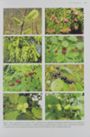
FEEDING 73 Fig. 37. Main vegetable food sources of M. avellanarius in Lithuania during the activity season: a) catkins of willow; b) strobiles of Norway spruce; c) inflorescences of pedunculate oak; d) berries of dwarf honeysuckle; e) raspberries; f) …
Excerpt
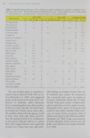
74 3. ECOLOGY OF M. AVELLANARIUS Table 8. Vegetable food preferences of M. avellanarius under conditions of captivity in Lithuania (I-b. - leaf-buds; f-b., fl., infl. — flower-buds, flowers, inflorescences; |., sp. — leaves, sprouts; fr., sd. — fruits, …
Excerpt
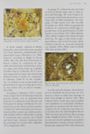
Fig. 38. Yellow droppings of M. avellanarius contai- ning pollen of Norway spruce inside a nestbox. In faecal samples collected in Britain during May, about half of the items recorded were plant epidermis, predominantly from honeysuckle leaves (Richards …
Excerpt
76 3. ECOLOGY OF M. AVELLANARIUS diet (Richards et al. 1984). Plant foods eaten by M. avellanarius in early summer included flowers of honeysuckle (only the proximal 5-10 mm of flower corolla tubes) and bram- ble (Bright & Morris 1993, 2005). In …
Excerpt
European tree seeds that constitute potential food for small mammals (Grodzinski & Saw- icka-Kapusta 1970). However, M. avellanarius also live in habitats without hazel or in habi- tats where the importance of hazel as a food source for these animals is …
Excerpt
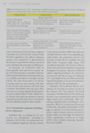
78 3. ECOLOGY OF M. AVELLANARIUS Table 9. Food preferences of M. avellanarius in different seasons (according to the sources indicated in chapter 3.6.1 of the present book; except in the Mediterranean region) Spring (April-May) Flowers of hawthorn, …
Excerpt
Eden & Eden (2001) however presented many examples of M. avellanarius feeding on insects in captivity and suggested that insects are an essential part of M. avellanarius diet, because very few habitats, including most woods where dormice occur, can …
Excerpt
80 3. ECOLOGY OF M. AVELLANARIUS ing by M. avellanarius in Mediterranean mixed forest. According to White (2007), supplementary sources of animal protein may be important for seed-eating rodents to improve their breeding. Feeding by M. avellanarius on …
Excerpt
ing tree fruits, but only stones of bird cherry fruits. Captive dormice did not eat the endo- derm of berry seeds and utilized only the flesh; many faecal samples contained whole bramble seeds (Richards et al. 1984). Seeds of raspberries were detected in …
Excerpt
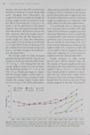
82 3. ECOLOGY OF M. AVELLANARIUS females, with more than 90% of all dormice detected in nestboxes in April being adult males. Emerging from hibernation, the weight of the males is comparatively high, the average weight of males in nestboxes in the first …
Excerpt
of many young females born in the previous year resulted in lower average weights com- pared to males during April-May. Increases in the weight dynamics curve of adult fe- males during June-August were related to two main factors: 1) breeding females, not …
Excerpt
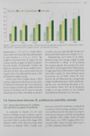
84 3. ECOLOGY OF M. AVELLANARIUS Weight dynamics curves during the year and average weights of M. avellanarius in May-July (about 17-19 g) are rather similar in all investigated parts of the distributional range, including Lithuania (Juskaitis 2001c), …
Excerpt
3.8. INTERACTIONS WITH OTHER ANIMALS 40 4 35 4 30 4 25 4 20 5 > _ Lim | wel Aug-| Aug-!l (1 juv-08 i juv-06 [J adult females MJ adult males Sep-l Sep-ll Oct-I Fig. 41. Comparison of weights (mean + 2SD) in separate demographic groups of M. avellanarius in …
Excerpt
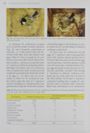
86 3. ECOLOGY OF M. AVELLANARIUS Fig. 42. Pied flycatchers (left) Lithuanian forests. In Lithuania, M. avellanarius occupied nests of pied flycatchers Ficedula hypoleuca (Fig. 42) most frequently, particularly in mid-May, i.e. in the period when the fly- …
Excerpt
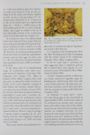
3.8. INTERACTIONS WITH OTHER ANIMALS (n = 146) were found in nests of F. hypoleu- ca: males were found in 51.4% of cases, fe- males in 41.8%, males and females together in 6.8%. At site A, the percentage of F. hy- poleuca nests destroyed by M. …
Excerpt
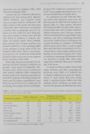
88 3. ECOLOGY OF M. AVELLANARIUS animal origin. In Lithuania, M. avellanarius most often occupy unfinished nests of P. ma- jor, this containing only the moss layer and very little wool or hair or these nests are lined with vegetable fibre. Likhachev …
Excerpt
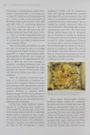
drag bird nests out (Juskaitis 1999c, 2010; Ulevicius & Juskaitis 2005). Insome cases, M. avellanarius themselves suffered from hole-nesting birds (Juskaitis 1995a). Nestboxes were reported several times to contain dead M. avellanarius with deep wounds to …
Excerpt
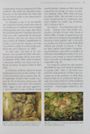
90 3. ECOLOGY OF M. AVELLANARIUS The presence of old dormouse nests in nest- boxes is associated with an increased per- centage of F. hypoleuca nests being destroyed (x°, = 14.0, p < 0.001). In the years when old dormouse nests were removed (1980-1982 and …
Excerpt
3.8. INTERACTIONS WITH OTHER ANIMALS building their nests not under the lid of the nestboxes, but inside the dormouse nests. However, in the nests there was room only for one hornet comb, so the insects had to leave the nestbox. In Lithuania at site A, in …
Excerpt
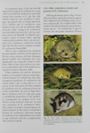
92 3. ECOLOGY OF M. AVELLANARIUS Competition between M. avellanarius and A. flavicollis occurs for nestboxes, not for territory. This can be proved by the fact that after two or three nestboxes were put up on some trees, in six cases both M. avellanarius …
Excerpt
3.8. INTERACTIONS WITH OTHER ANIMALS In exceptional cases, G. glis can even kill and eat the young of M. avellanarius. Lozan (1970) wrote that M. avellanarius was found among food remains of G. glis, but only solitary instances were recorded. In Hun- …
Excerpt
94 3. ECOLOGY OF M. AVELLANARIUS quercinus — were caught during one period of time in 1962 (Kratochvil 1967; Holisova 1968). All four dormouse species were also found in the northern Tirol (Schedl 1968), the Fichtel Mountains (Albrecht 1957), Ba- varia …
Excerpt
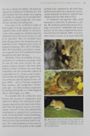
3.8. INTERACTIONS WITH OTHER ANIMALS tion for a natural tree hollow. He found an injured M. avellanarius at the base of a tree and assumed that this animal was sleeping in a hollow at a height of 12 m and had been expelled by a black woodpecker Dryocopus …
Excerpt
96 3. ECOLOGY OF M. AVELLANARIUS hazel crop is not abundant, nut-eating ani- mals can consume all the hazelnuts by early September. Birds, mostly thrushes Tur- dus spp., which feed on the fruits of glossy buckthorn Frangula alnus (Logminas 1990) may also …
Excerpt
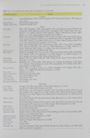
3,8. INTERACTIONS WITH OTHER ANIMALS Table 12. List of predators in whose diet M. avellanarius were found Vipera aspis Vipera berus Elaphe longissima Strix aluco Tyto alba Asio otus Athene noctua Bubo bubo Glaucidium passerinum Aegolius funereus Strix …
Excerpt
98 3. ECOLOGY OF M. AVELLANARIUS fourth most abundant prey of S. aluco and composed 8.48% among 13 912 prey items (Obuch 2004). In higher mountainous zones and wetter areas of Slovakia, which are mostly covered with mixed conifer-deciduous for- ests or …
Excerpt
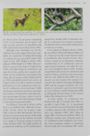
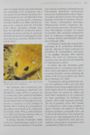
Fig. 50. Among mammalian predators, M. avellanarius was most often found in the diets of red fox and 3. INTERACTIONS WITH OTHER ANIMALS martens: a) red fox; b) pine marten (photos by V. Stirké). ten Martes foina (24 specimens comprising 6.15% of all …
Excerpt
100 3. ECOLOGY OF M. AVELLANARIUS should be noted that litters of dormice were present in eight of the nests. Two out of four juveniles of M. avellanarius were found among the nest remains inside one nestbox, while the main part of the nest was dragged …
Excerpt
3.8. INTERACTIONS WITH OTHER ANIMALS total, 47 nymphs of ticks were removed from four individuals of M. avellanarius, and a new species of Lyme disease spirochete Bor- relia spielmanii sp. nov. was detected in ticks feeding on E. quercinus and M. …