

Excerpt
192 REFERENCES comparison of food availability and reproduction in the edible dormouse (Glis glis). Mammalian Biology, 67: 219-232. Schulz B., Ehlers S., Lang J. & Biichner S. 2012. Hazel dor- mice in roadside habitats. Peckiana, 8: 49-55. Schulze W. …
Excerpt
ferences in nest-boxes occupation by the dormouse Muscardinus avellanarius L. (Rodentia, Myoxidae) in two areas of central Italy. Ecologia Mediterranea, 25: 125-130. Spitzenberger F. 1983. Die Schlafer (Gliridae) Osterreichs. Mammalia austriaca 6 …

Excerpt
194 REFERENCES ference on Dormice. Book of Abstracts. 9-12 October 1996, Moscenicka Draga, Croatia. Zagreb: Croatian Natural History Museum, 46. Uitenbroek D.G. 1997. Simple Interactive Statistical Ana- lysis. Available from: …
Excerpt
Osterzgebirge. Naturschutzarbeit und naturkundliche Heimatforschung in Sachsen, 18: 91-93. Williams R.L., Goodenough A.E., Hart A.G. & Stafford R. 2013. Using long-term volunteer records to examine dormouse (Muscardinus avellanarius) nestbox selec- tion. …

Excerpt
Juskaitis, Rimvydas Ju277 The Common Dormouse Muscardinus avellanarius : ecology, population structure and dynamics / Rimvydas Juskaitis. - 2nd ed. — Vilnius : Gamtos tyrimy centras, 2014, 196 p. : iliustr., diagr. Santr. angl. — Bibliogr.: p. 177-195 …
Excerpt
ris et. al. 1990; Woods 1996). According to Vaughan (2001), 13 out of 18 nests were still occupied by M. avellanarius on 22 Novem- ber 1995, and seven of the occupied nests still contained litters of young. The last dor- mice seen that year were two …
Excerpt
48 3. ECOLOGY OF M. AVELLANARIUS and the second in November-December, nestboxes are deserted only during August, ive. in the dry hot season (Sara et al. 2001). Until now, nobody has _ investigated through side-by side experiments which type of wooden …
Excerpt
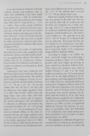
In an experiment in Lithuania with both ordinary wooden bird nestboxes and ce- ramic ones established at the same height in the same tree (n = 100), M. avellanarius showed a particular preference for wooden ones (29% and 2% respectively; x’, = 27.8, p < …
Excerpt
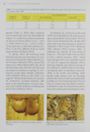
50 3. ECOLOGY OF M. AVELLANARIUS Table 3. Use of nestboxes set up at different heights by M. avellanarius and A. flavicollis in Lithuania at site B in autumn 1985-1987 Use of nestboxes by ae ’ ES peo M. avellanarius A. flavicollis n % n % 1 105 7 6.7 19 …
Excerpt
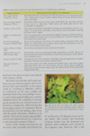
3.3. USE OF NESTBOXES 51 Table 4. Regional peculiarities in nest material used by M. avellanarius in nestboxes Tula region, Russia (Likhachev 1967a) Moscow region, Russia (Likhachev 1967a) Moldova (Lozan 1970) Moldova (Airapetyants 1983) The West …
Excerpt
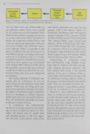
3. ECOLOGY OF M. AVELLANARIUS Fig. 27. Preference of green leaves of different trees and shrubs as nest material shown by M. avellanarius in nestboxes in mixed coniferous-deciduous forest in Lithuania. was not valid in the case of black alder Al- nus …
Excerpt
3.4. ACTIVITY PATTERNS 3.4. Activity patterns in M. avellanarius 3.4.1. Seasonal activity and hibernation Data on the seasonal activity of M. avel- lanarius are usually obtained from monitor- ing nestboxes, and they show dependence on geographical …
Excerpt
54 3. ECOLOGY OF M. AVELLANARIUS tions, they continue to be active during the first week of October or they may start to hi- bernate (Juskaitis & Biichner 2013). The moulting process is a seasonal phe- nomenon, which has been very little investi- gated in …
Excerpt
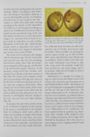
October, but not in spring and early summer (Juskaitis 2008a). According to this indica- tion, the timing of moulting is different in separate demographic groups. In Lithuania, juveniles born in June moult in late July - August, i.e. earlier than adult …
Excerpt
56 3. ECOLOGY OF M. AVELLANARIUS Physiological characteristics of hiber- nation include the reduction of body tem- perature to near the ambient temperature, a markedly reduced metabolic rate and irregu- lar spontaneous arousals by activation of the major …
Excerpt
three cases, the hibernation nest and imme- diate surroundings were covered uniformly with snow, and it is possible that M. avel- lanarius partly moved on the surface of the snow. A marked male occupied eight differ- ent nests during November-March, …
Excerpt
58 3. ECOLOGY OF M. AVELLANARIUS ous reproduction throughout the year, but with seasonal peaks, the second occurring in November—December (Sara et al. 2001). The average body weight was relatively stable during the year, and the phase of weight in- crease …
Excerpt
of M. avellanarius to the nest during the night were very infrequent in all seasons (recorded in only six of 183 dormouse-nights; Bright et al. 1996c). Laufens (1975) described tempo- rary returns to nestboxes as frequent in au- tumn, but absent or very …
Excerpt
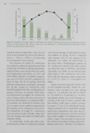
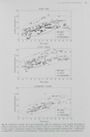
60 3. ECOLOGY OF M. AVELLANARIUS 80 60; 40 20 Percentage of torpid adult dormice April May June July 10 Mean air temperature, °C as eer! es LO August September October Fig. 31. Proportion of torpid adult M. avellanarius recorded (columns) and mean air …
Excerpt
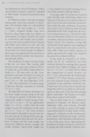
3.4. ACTIVITY PATTERNS 61 a) April — May 25 20 eae $C GS = g eg A = aoe © 00 #00#00.0 © 15 bei as Or 56° 2 2 BOSaaS ; oon E ei e ry) @00 @ r Ce +e0e0e0e0+ @ 00+: Sos Ol heecans e ee C@ce3eee+e © 00 00000. - c +0¢4+" @ 0 00 © : EO) a Onn @ 0CV@ee ee Ce ke …
Excerpt
62 3. ECOLOGY OF M. AVELLANARIUS the definition by Wilz & Heldmaier (2000), such duration of torpor cannot be regarded as “daily torpor”, because it lasted more than 24 hours. In Lithuania, torpor was more frequent among adult males than females. In …
Excerpt
found torpid when ambient temperature was < 14—15°C. This coincides closely with the re- sults of Eisentraut (1956), who established that the critical temperature for M. avellanarius to fall into dormancy was about 15-16°C. At night, M. avellanarius were …
Excerpt
64 3. ECOLOGY OF M. AVELLANARIUS Although torpor is considered an ani- mal’s adaptation to save energy, cases when torpid M. avellanarius were found in the open air cannot be considered adaptive. In Lithuania, five cases have been registered when people …
Excerpt
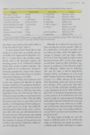
3.5. BREEDING Table 5. Timing of birth in M. avellanarius in different regions (except Mediterranean region) Tula region, Russia 16 May 1-2 September Likhachey 1966a Moscow region, Russia 30 May 8-9 September Likhachev 1966a The Alps, Germany 1“ half of …
Excerpt
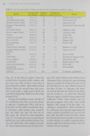
3. ECOLOGY OF M. AVELLANARIUS Table 6. Litter size and number of litters per season in M. avellanarius in different regions The Alps 3.9 (2-7) 4] 1 Kahmann & Frisch 1950 The foothills of the Alps 2.9 (2-4) 10 1 Wachtendorf 1951 Kampinos forest, Poland …
Excerpt
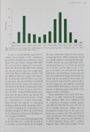
20 7 Percentage 0 + May-2 May-3 Jun-1 Jun-2 Jun-3 Jul-1 3.5. BREEDING Jul-2 Jul-3 Aug-1 Aug-2 Aug-3 Sep-1 Sep-2 Sep-3 Fig. 33. Birth time of young in M. avellanarius (n = 758) in ten-day periods in Lithuania (site A in 1981— 1989, 1997-2013 and site B in …
Excerpt
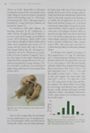
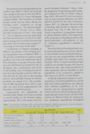
68 3. ECOLOGY OF M. AVELLANARIUS (Bird et al. 2012). Meanwhile in Lithuania, breeding by young-of-the-year females was a rather frequent occurrence and it comprised 18.6% of all breeding cases (n = 939) regis- tered during 1981-2013. Lithuanian data on …
Excerpt
The mean litter size also depended on the mother’s age (Table 7). Litter size increased from young-of-the-year to two-year-old fe- males, but declined in 3-4-year-old females (Juskaitis 2008a). The first litters of marked females, which had two litters …
Excerpt
70 3. ECOLOGY OF M. AVELLANARIUS the year, but with seasonal peaks (Sara et al. 2001). November and December were the main months for breeding (50% of 34 litters found), followed by May and June (20.6%). Litters born in spring were smaller than those …
Excerpt
ern parts of the distributional range and by the rather frequent breeding by young-of- the-year females. In other European dor- mouse species - E. quercinus, D. nitedula and G. glis — two litters per season are re- 3.6. Feeding by M. avellanarius 3.6.1. …