
Excerpt
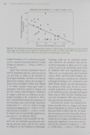
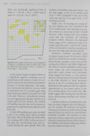
162 5. SELF-REGULATION IN M. AVELLANARIUS Spearman rank correlation: r, = -0.58, p = 0.002, n = 27 T AAA A AA 20 a n ® % ate ° 15 A os & vo o2 £5 10 —- QA o®o on” De = 5 ® 2 ® a 0 A 0.1 0.2 0.3 0.4 0 0.6 Density of adult females in July, ind./ha Fig. 85. …
Excerpt
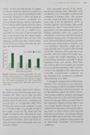
tively). In three ten-day periods of August, an obvious trend was observed, namely that overwinter survival of later breeding females decreased compared to earlier breeding fe- males (Fig. 86). However, overwinter sur- vival of females that gave birth in …
Excerpt
164 5. SELF-REGULATION IN M. AVELLANARIUS To summarise, prolonged breeding in M. avellanarius populations was associated with decreased adult female density in sum- mer, but the abundance of suitable food could also stimulate such breeding. In the south …
Excerpt
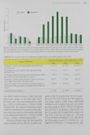
(J control Wi experiment Density, ind./ha 1985 1986 1987 1988 1989 5.4. INFLUENCE OF NESTBOXES 2000 2001 2002 2003 2004 2005 2006 2007 2008 2009 Fig. 87. Density of adult M. avellanarius in two separate plots of study site A in 1985-1989 and 2000-2009. …
Excerpt
166 5. SELF-REGULATION IN M. AVELLANARIUS effect was statistically significant both in males (t = 3.12, df = 39, p = 0.003) and fe- males (t = 2.21, df = 24, p = 0.037). 100 m e1-—_—2 => 3 — Fig. 88. Home ranges (minimum convex polygons) of adult M. …
Excerpt
Nestboxes set up at high densities can be useful for the conservation of M. avel- lanarius where dormice are rare and threat- ened. However, because of their consider- able influence on dormouse population 5.5. SELF-REGULATION IN RODENTS density and other …
Excerpt
168 5. SELF-REGULATION IN M. AVELLANARIUS Thus, extrinsic factors such as food level may also interact with density in determining the proportion of females entering the breeding population. Prevot-Julliard et al. (1999) found that delayed maturation in …
Excerpt
hibition of reproduction may be the single most important mechanism regulating and limiting populations of the Peromyscus spe- cies, although a high mortality rate may be associated with increased density too (Chris- tian 1971). Populations of Alpine snow …

Excerpt
170 5. SELF-REGULATION IN M. AVELLANARIUS of the species distributional range where population densities are comparatively low. In other southern parts of its range where living conditions are more favourable and population densities are higher, different …
Excerpt
Summary The common dormouse Muscardinus avellanarius (Linnaeus, 1758), also often re- ferred to as the hazel dormouse, is a repre- sentative of the rodent order (Rodentia) and dormouse family (Gliridae). The geographi- cal range of M. avellanarius covers …
Excerpt
172 SUMMARY ground is about 1 m, and is related to the age and height of young trees and shrubs. In woodlands with high canopy forming trees, most nests of M. avellanarius can be situated in the canopy out of human reach. In all parts of its …
Excerpt
the soil temperature. Hibernation follows a characteristic pattern: torpor bouts up to 30 days are interrupted by bouts of euthermia lasting several hours. Photoperiod is the principal exogenous factor influencing pan-seasonal activity in M. avellanarius. …
Excerpt
174 SUMMARY 10-15 ind./ha. However, data on M. avel- lanarius population density may be overes- timated by up to ten-fold in some cases for methodological reasons or may reflect only the densities in small and most favourable plots. In large areas with …
Excerpt
to 80% of marked animals lost during win- ter (e.g. Likhachev 1966b; Juskaitis 2008a). There is an obvious basic tendency for younger dormice to suffer higher winter mortality rates. Some juveniles born in late summer or early autumn do not accumulate …
Excerpt
176 SUMMARY population increase in autumn and is due to several factors. The proportion of breeding adult females is the most important factor determining reproductive success in popu- lations of M. avellanarius. Some young-of- the-year females usually …
Excerpt
References Adamik P. & Kral M. 2008a. Nest losses of cavity nesting birds caused by dormice (Gliridae, Rodentia). Acta Theriologica, 53: 185-192. Adamik P. & Kral M. 2008b. Climate- and resource-driven long-term changes in dormice populations negatively …
Excerpt
178 REFERENCES els by Nathusius’ pipistrelle (Pipistrellus nathusii) in southeastern Lithuania. Acta Zoologica Lituanica, 19: 3-9) Bart J. & Notz W. 1994. Analysis of data. In: Bookhout T. A. (ed.) Research and management techniques for wildlife and …
Excerpt
corridors: arboreal dormice avoid corridor gaps. Ani- mal Behaviour, 56: 1485-1490. Bright P.W. & MacPherson D. 2002. Hedgerow manage- ment, dormice and biodiversity. Research report No 454. Peterborough: English Nature. Bright P. & Morris P. 1989. A …
Excerpt
180 REFERENCES Capizzi D. 2000. Diet shifts of the tawny owl Strix aluco in central and northern Italy. Italian Journal of Zoology, 67: 73-79. Capizzi D., Battistini M. & Amori G. 2002. Analysis of the hazel dormouse, Muscardinus avellanarius, distribu- …
Excerpt
Duma I. 2007. Distribution of Muscardinus avellanarius (Linnaeus, 1758) (Mammalia: Rodentia: Gliridae) in the southwestern Romania with notes on the breed- ing and biology of the species. Travaux du Muséum National d’Histoire Naturelle “Grigore Antipa”, …
Excerpt
182 REFERENCES getieren (Bilche Gliridae; Mause Muridae) in den Waldern Baden-Wiirttembergs. Ornitologischer An- zeiger, 38: 107-130. Gatter W. & Schiitt R. 2001. Langzeitpopulationsdynamik des Siebenschlafers Myoxus glis in Baden-Wirttem- berg — Ein …
Excerpt
Honza M., @ien I.J., Moksnes A. & Roskaft E. 1998. Sur- vival of reed warbler Acrocephalus scirpaceus clutches in relation to nest position. Bird Study, 45: 104-108. Hurrell E. & McIntosh G. 1984. Mammal Society dor- mouse survey, January 1975 — April …
Excerpt
REFERENCES its relation with seed crop of forest trees. Mammalian Biology, 67: 206-211. Juskaitis R. 2003a. Abundance dynamics and reproducti- on success in the common dormouse, Muscardinus avellanarius, populations in Lithuania. Folia Zoologi- ca, 52: …
Excerpt
mals. Rare and standing under a threat of extinction species of wild animals]. Minsk: “Belaruskaya Encykla- pedyya” imeni Petrusya Brovki, 34-35 (in Russian). Kallander H., Norberg A., & Hosking E. 1959. Photo- graphic studies of some less familiar birds. …
Excerpt
REFERENCES Lang J. & Kiepe K. 2011. Strassenrander als Ausbreitungs- achsen fiir die Haselmaus (Muscardinus avellanarius): Ein Fallbeispiel aus Nordhessen. Hessische Faunisti- sche Briefe, 30: 49-54. Lange A.B. 1959. A new species of Gamasoidea mites — …
Excerpt
Lohrl H. 1960. Saugetiere als NisthGhlenbewohner in Sud- westdeutschland mit Bemerkungen tiber ihre Biolo- gie. Zeitschrift fiir Sdugetierkunde, 25: 66-73. Lohrl H. 1978. Hohlenkonkurenz und Herbst-Nestbau beim Feldsperling (Passer montanus). Vogelwelt, …
Excerpt
188 REFERENCES The high spring population abundance of Muscardi- nus avellanarius in the High Tatra Mountains. In: Ba- konyi G., Bésze Sz. & Morris P. (eds.) International Conference on Dormouse (Myoxidae). 26-29 August 2002, Godol6, Hungary. Abstracts. …
Excerpt
Westerzgebirge. Sdugetierkundliche Informationen, 2 (12): 569-588. Mockel R. 1996. Zur Verbreitung und Haufigkeit von Ha- selmaus (Muscardinus avellanarius) und Gartenschla- fer (Eliomys quercinus) im Westerzgebirge. In: Miil- ler-Stiess H. (ed.) Schlafer …
Excerpt
190 REFERENCES Paspali G., Oruci S., Koni M., Wilson LF., Krystufek B. & Bego F. 2013. Seasonal variation of small mammals in the diet of the barn owl (Tyto alba). in the Drinos River valley, southern Albania. Turkish Journal of Zo- ology, 37: 97-105. …
Excerpt
dietary overlap and its possible relationship to the co- existence of mesocarnivores in intensive agricultural habitats. Population Ecology, 54: 521-532. Richards C.G.J., White A.C., Hurrell E. & Price F.E.F. 1984. The food of the common dormouse, …